

What factors should I consider when deciding to sell my house as-is?
When deciding whether to sell your house as-is, consider the property’s condition, likely sale value, repair and holding costs, your timescale, and any legal or disclosure responsibilities. Compare the financial effect and convenience of accepting an as-is offer with the potential benefits and risks of carrying out work before marketing the property.
Selling a house as-is is a decision to transfer the property in its current state rather than making it ready for the conventional open market. The right choice depends not only on the offer price, but also on your financial position, ownership circumstances, transaction terms, evidence supporting the valuation and the practical certainty of completing the sale.
Start with your reason for selling. An as-is sale may be more suitable where the priority is simplifying a complicated ownership situation, releasing equity, dealing with an inherited property or reducing involvement in a property that you no longer want to manage. Be clear about the outcome you need from the transaction. For example, you may need enough money to redeem a mortgage, settle an estate, divide assets or move into another home. This helps you assess an offer against the amount you must actually receive, rather than comparing headline figures alone.
Check your ownership and authority to sell. Before accepting an offer, establish who must sign the contract and whether anyone else has an interest in the property. This can be particularly important where the house is jointly owned, held in a company, subject to a trust, or being sold following a death or relationship breakdown. Probate, a power of attorney, a court order or other formal authority may be needed before the transaction can proceed. A conveyancer can confirm what evidence is required and identify title issues that could affect the sale.
Calculate the net amount you will receive. The offer should be considered alongside the financial commitments attached to the property. These may include:
- the outstanding mortgage and any early repayment charge;
- secured loans, restrictions or charges registered against the title;
- conveyancing and administrative fees;
- arrears owed to a lender, local authority or service provider;
- removal, storage, clearance or temporary accommodation costs; and
- any tax or benefit consequences that apply to your circumstances.
Ask for a written breakdown of proposed deductions and confirm whether any cost is payable by you if the sale does not complete. If the property is mortgaged, your conveyancer will normally obtain a redemption statement so that the amount needed to repay the lender is known.
Assess how the offer was calculated. An as-is valuation should be supported by relevant evidence, such as comparable properties, the location, the tenure, the size and layout, and known issues affecting the title or use of the property. Be cautious of an initial figure that changes substantially after an inspection without a clear explanation. You can obtain independent opinions from a chartered surveyor, local property professionals or other suitably qualified advisers. The most useful comparison is between the likely net proceeds and the risks and obligations attached to each available selling route.
Understand the buyer’s process. Ask who is purchasing the property, whether the buyer is using finance, whether another sale must happen first and what checks will be carried out. A cash-funded buyer may not need a mortgage valuation, but that does not remove the need for conveyancing, proof of funds, identity checks or title investigations. Request evidence that the buyer has the funds available and find out whether the buyer intends to assign the contract or resell the property before completion. These points can affect the level of certainty associated with the offer.
Read the proposed contract carefully. The important terms are not limited to the price. Check the deposit, completion date, what happens if either party withdraws, responsibility for damage before completion, included fixtures and fittings, and any conditions attached to the offer. Confirm whether the agreement is conditional on a survey, further negotiation, planning information or another transaction. Do not rely on verbal assurances where a point matters to you; ask for it to be recorded in the written offer or contract.
Consider possession and the contents of the property. Agree whether the sale is with vacant possession and establish the date by which occupants, tenants and personal belongings must be removed. If the property is tenanted, review the tenancy terms and any requirements relating to notice or deposits. Make a written list of items that are included or excluded, including appliances, fitted furniture, garden equipment and stored materials. Clearing the property in advance is not always necessary for an as-is sale, but the contractual position should be unambiguous.
Prepare accurate information for the conveyancer. Gather the title documents, guarantees, planning and building regulation records, mortgage details, tenancy papers, service-charge information and correspondence about disputes or notices. Answer property information forms honestly and consistently. An as-is arrangement does not normally remove the obligation to answer direct questions accurately or to avoid concealing a known material issue. If you are unsure whether a fact is relevant, raise it with your solicitor rather than guessing.
Check restrictions and property-specific complications. Leasehold houses may involve a freeholder, managing agent, service charges, an information pack or restrictions on alterations. Other matters that can require investigation include flying freeholds, shared access, unregistered land, missing documents, rights of way, planning breaches, restrictive covenants and disputes with neighbours. These issues do not automatically prevent a sale, but identifying them early gives the legal representatives more opportunity to resolve them.
Compare certainty with the alternative route. A higher proposed price is not necessarily the better result if it carries conditions, uncertain funding or a greater risk of renegotiation. Conversely, accepting a lower as-is offer may be unsuitable if it leaves insufficient funds to discharge secured debts or meet your onward commitments. Compare each option using the same criteria: expected net proceeds, contractual conditions, evidence of funds, professional fees, responsibility for outstanding issues and the likelihood of reaching completion.
Use independent professional advice where the circumstances warrant it. A conveyancer can explain the contract and title position, while an accountant or tax adviser can consider the wider tax treatment. If the sale follows probate, divorce, debt pressure or repossession proceedings, specialist advice may be especially important because another party or deadline may affect your authority to sell. A cash buyer can provide an as-is offer, but you remain responsible for deciding whether its terms are appropriate for your circumstances.
A sensible decision therefore rests on the complete transaction rather than the property’s appearance or the initial offer. Establish the amount you need, verify your authority and the buyer’s funds, obtain a clear written breakdown of terms, disclose relevant information accurately and have the contract reviewed before committing. This approach makes it easier to judge whether an as-is sale provides an acceptable balance of proceeds, control and transaction certainty.
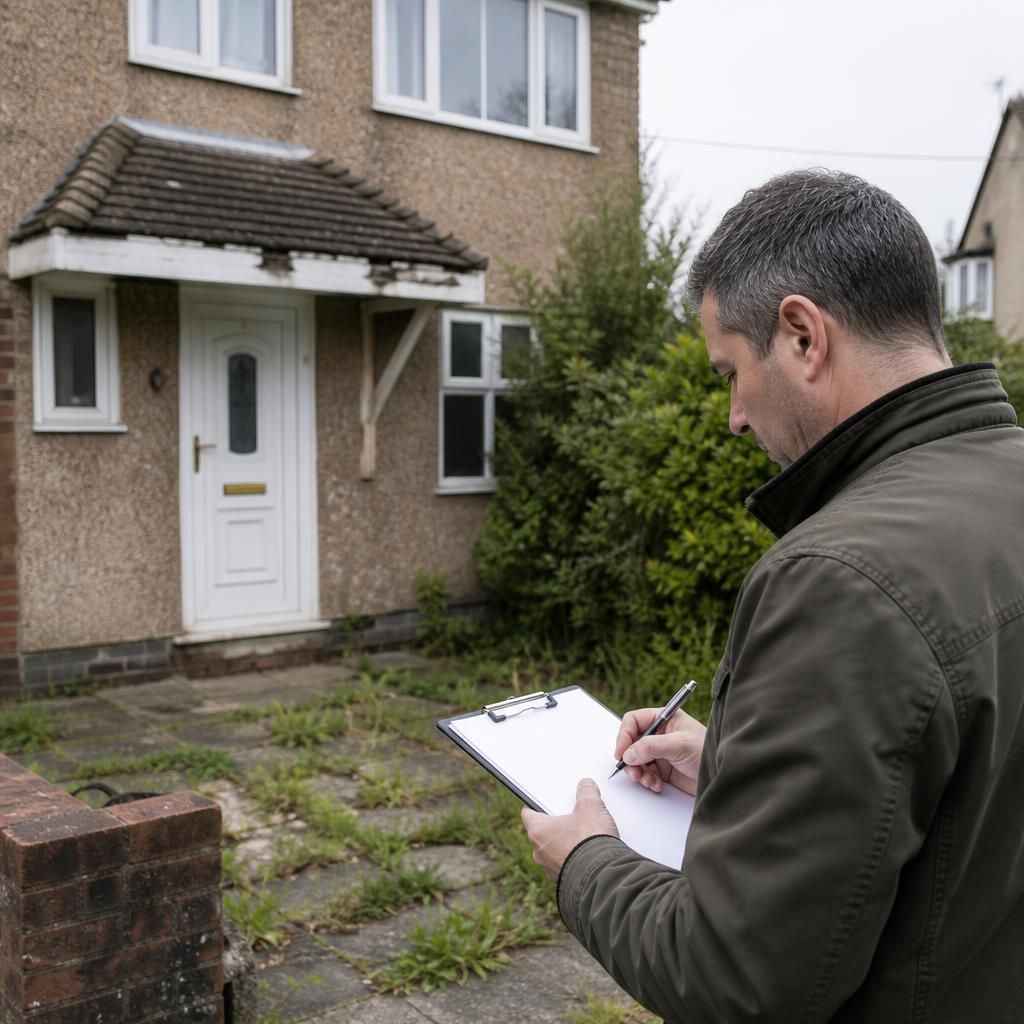
Consider how the property will be protected between accepting an offer and completion. You remain responsible for reasonable care of the house during this period, including dealing with leaks, damage, security concerns and essential maintenance. Check your buildings insurance policy and tell the insurer about any material change, such as the property becoming unoccupied or undergoing clearance. Some policies impose conditions for vacant homes, so failing to notify the insurer could affect cover.
Also allow for ongoing practical costs, including utilities, council tax, gardening, alarm monitoring or urgent repairs. These expenses may be modest for a short transaction but more significant if completion is delayed. Clarify who bears responsibility for any new damage and record the property’s condition when the contract is agreed. This helps you judge the as-is option against the continuing responsibilities of retaining the property until completion.