

How do cash buyers determine the value of a complex property?
Cash buyers determine a complex property’s value by assessing comparable local sales alongside its condition, location, title, occupancy, tenancy and any legal or structural issues. They then account for the likely costs, risks and time involved in resolving those complications before making an offer.
A cash buyer values a complex property by building an evidence-based estimate of its marketable end value, then modelling the expenditure, uncertainty and transaction conditions involved in reaching that outcome. The resulting offer reflects not only what the property might be worth in a straightforward sale, but also how reliably that value can be realised.
1. Establishing the underlying property value
The starting point is usually the value of a comparable, normally saleable property in the same broad market. The buyer then considers whether the subject property differs because of its size, layout, tenure, access, condition or potential use. Asking prices are treated cautiously because they show seller expectations rather than completed transactions. Evidence from completed sales, local demand and the likely type of future purchaser provides a more dependable basis.
Where there is little directly comparable evidence, the buyer may use more than one method. For example, the value may be considered as an existing home, as a refurbished home, or as a property with development potential. Each scenario depends on whether the relevant permissions, access rights, title arrangements and practical works can actually be achieved.
2. Converting physical problems into costs
A survey, inspection report, photographs and supporting documents help the buyer distinguish visible defects from issues that could affect the structure or future saleability. The assessment may consider roofing, damp, subsidence, drainage, electrics, plumbing, heating, windows, insulation and fire safety. Cosmetic work is normally treated differently from defects requiring specialist investigation or statutory approval.
Quotes and professional estimates are more useful than broad allowances. However, a buyer may still include a contingency where the full extent of a defect cannot be confirmed before purchase. The estimate can also include associated work, such as making a property safe, removing waste, obtaining certificates or coordinating several trades. This means the deduction is not limited to the apparent repair itself.
3. Allowing for legal and administrative uncertainty
Legal complexity is assessed according to its effect on ownership, use, funding and resale. Examples include an incomplete probate process, restrictions on the title, missing deeds, boundary disputes, absent signatures, unresolved charges, planning breaches and uncertainty over rights of way. A leasehold property may require examination of the remaining term, ground rent, service charges, alteration consent and any notice requirements.
The buyer may ask for documents such as title information, leases, planning records, building regulation certificates, tenancy agreements, notices and correspondence relating to disputes. The purpose is not simply to identify a problem, but to establish whether it can be resolved, who must resolve it and what evidence a future purchaser or solicitor would require.
4. Assessing occupation and possession
Occupation can change the value and the practical route to resale. A buyer will establish whether the property is vacant, occupied by the owner, occupied under a written tenancy or occupied under an informal arrangement. The terms of any tenancy, rent position, deposit records, notice history and statutory obligations may affect the buyer’s control of the property after completion.
Where vacant possession is expected, the buyer must consider whether it is legally and practically achievable. If possession depends on negotiation or formal proceedings, the associated uncertainty may affect the offer and the proposed contract terms. A property with a tenant may instead be valued on the basis that the tenancy continues, if that is compatible with the buyer’s intended strategy.
5. Testing the likely end value
For a property intended for refurbishment or resale, the buyer models the likely value after the planned work. This is not a guaranteed price: it depends on the specification, market conditions, timing and the quality of the completed work. Planning and building control requirements are considered before potential value is attributed to an extension, conversion or change of use.
Development potential is therefore usually treated as conditional rather than certain. A buyer may value the property on its current lawful use and then consider additional value only where the relevant consent, access, services and layout make the proposal credible. Unapproved work or an unusual layout may reduce the reliability of comparable evidence.
6. Calculating the offer from the assessed value
The buyer generally works backwards from the estimated achievable end value. The calculation can include:
- the purchase price and transaction costs;
- identified repairs, refurbishment or clearance;
- professional fees, surveys, planning and legal work;
- insurance, utilities, security and other holding costs;
- the cost of arranging or committing capital;
- an allowance for unresolved risks and changes in scope; and
- the return required for taking responsibility for the project.
These deductions are not applied mechanically. A well-documented defect with a reliable contractor’s estimate may be easier to price than a smaller issue with uncertain legal consequences. Similarly, a property that can be occupied and resold without major intervention may carry less risk than one dependent on several permissions or third-party agreements.
7. Applying sensitivity testing
Because complex-property valuation involves assumptions, a careful buyer tests what happens if an assumption changes. The analysis may compare an optimistic, expected and cautious outcome, such as a longer repair period, a lower resale value, additional remedial work or a delay in obtaining consent. The more the result depends on one uncertain assumption, the greater the adjustment may be.
This is why two cash buyers can produce different offers without either necessarily making a mathematical error. They may use different end values, risk allowances, project plans or assumptions about possession. The important point is whether the assumptions are clear, relevant and supported by available evidence.
8. Reviewing the evidence behind the figure
A homeowner can ask what information was used, which deductions relate to confirmed costs and which reflect uncertainty. It is reasonable to check whether the proposed figure is based on the property’s present condition or on a future scenario requiring work and permission. The basis of any adjustment should be distinguished from the legal steps needed before completion.
An independent surveyor or solicitor can provide a separate view where the property has substantial structural, title or leasehold complications. This does not guarantee that another valuation will match the cash offer, because a cash buyer is pricing the property together with the responsibility and risk of carrying the transaction forward. It does, however, help the owner understand whether the assumptions are complete and whether important issues have been overlooked.
In practice, the most dependable valuation is one built from verified documents, realistic works information and clearly stated assumptions. A cash offer should be judged by its underlying calculation and the conditions attached to it, rather than by comparing the headline figure with an online estimate or an asking price for a different type of property.
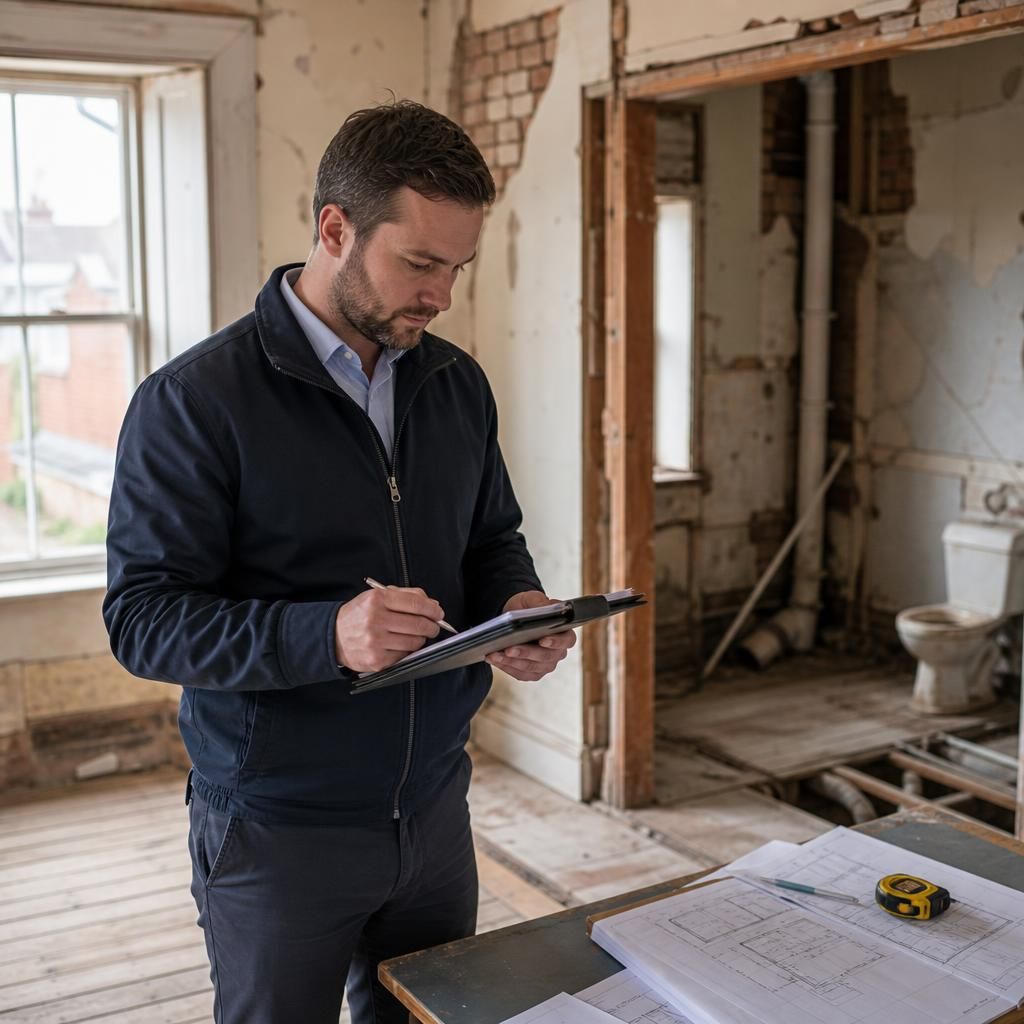
A complex property may be valued differently from a standard home if its condition, legal status or unusual features limit mortgageability. A cash buyer therefore considers whether a future purchaser could obtain mainstream finance, or whether the property would mainly appeal to cash buyers or specialist lenders.
This affects the likely buyer pool, marketing period and achievable resale price. For example, significant structural concerns, missing certificates or an unresolved title issue may prevent a lender from accepting the property as suitable security until the problem is addressed. The valuation should reflect this practical market restriction, rather than assuming the same price as a comparable home with straightforward documentation and finance.