

What legal documentation will I need to provide or prepare when selling my house for cash?
When selling your house for cash in the UK, you will generally need to provide proof of identity, title information, property forms, details of mortgages or other charges, and supporting documents for alterations, guarantees or lease terms where relevant. Your conveyancer will prepare or check the sale contract and transfer deed, while probate, divorce or repossession cases may require additional legal documentation.
The paperwork for a cash sale is broadly the same as for any other residential conveyance. The fact that the buyer is not relying on a mortgage may remove lender-specific checks, but your conveyancer must still establish who owns the property, whether it can be transferred legally and whether any restrictions or liabilities affect it.
Requirements vary according to the property and ownership
Your conveyancer will confirm the exact documents required after checking the title and your circumstances. The checklist can differ depending on whether the property is freehold or leasehold, whether there is more than one owner, and whether the sale involves an estate, a trust, a company or a power of attorney. The legal requirements also differ between England and Wales, Scotland and Northern Ireland, so documents should be prepared for the jurisdiction in which the property is situated.
Documents relating to ownership
Where the registered ownership is straightforward, your conveyancer can usually obtain the relevant title records and plans electronically. You may still need to clarify discrepancies, such as a spelling difference in a name, a missing middle name, an incorrect address or a boundary that does not match your understanding of the property. Any issue of this kind should be raised early, because correcting the register or proving the chain of ownership can require additional evidence.
If the property is jointly owned, every registered owner will normally need to approve and sign the sale documentation. If an owner has died, the personal representatives must show that they have authority to sell. This commonly involves the grant of probate or letters of administration, together with any further evidence requested by the conveyancer. A will alone does not usually provide the same authority as the formal grant.
Extra evidence may also be needed where the property is held by trustees, a company or someone acting under a lasting power of attorney. The relevant trust deed, company authority or registered power of attorney may need to be reviewed before the transaction can proceed.
Information about the property itself
Your conveyancer will ask questions about matters that could affect the buyer’s use, ownership or future sale of the property. Prepare clear details about boundaries, access rights, shared driveways, parking arrangements, disputes, notices and any informal agreements with neighbours. If rights or obligations are set out in a deed, transfer or agreement, provide a copy rather than relying on a verbal explanation.
For alterations and extensions, locate any planning approvals, building regulations completion certificates and relevant compliance certificates. Examples can include certificates for replacement windows, electrical work, gas installations or structural alterations. Guarantees, warranties and certificates for roof work, damp treatment, timber treatment or other specialist work may also be useful. If paperwork is missing, tell the conveyancer rather than assuming that the work is irrelevant; they can explain whether replacement evidence or an indemnity policy should be considered.
Leasehold and managed properties
A leasehold sale often involves additional information from the freeholder or managing agent. Keep details of the lease, ground rent, service charges, planned major works, building insurance and any notices affecting the flat or building. The buyer may also need information about restrictions on assignment, notices of transfer, registration fees, consents and membership of a residents’ management company.
Ask the managing agent or freeholder for the applicable sale information as early as possible. Some of it may need to be completed by a third party, and the conveyancer cannot substitute their own answers for information held by the building manager. If the lease has a short remaining term, unusual restrictions or missing pages, obtain legal advice before agreeing how the issue will be addressed.
Existing borrowing and other restrictions
If a mortgage or other secured borrowing is linked to the property, your conveyancer will need accurate account details so that the amount required to redeem it can be obtained and paid from the sale proceeds. Tell them about second charges, county court judgments, charging orders, equity-release arrangements or other debts secured against the property. These matters do not necessarily prevent a cash sale, but they must be dealt with before the buyer can receive clear title.
Similarly, disclose notices from a local authority, planning enforcement correspondence, rights of way disputes or ongoing legal proceedings. Concealing a problem can delay the transaction and may create liability after completion.
Documents for unusual or urgent circumstances
A divorce or separation may require a court order, consent order or written agreement confirming who has authority to sell and how the proceeds are to be dealt with. Where a lender has issued arrears or possession correspondence, give the conveyancer the latest letters and any stated deadlines. They can then establish what must be paid and whether another party’s consent is required.
For an unoccupied property, provide information about keys, alarm systems, utilities, insurance and any caretaker arrangements. This is not usually evidence of ownership, but it helps the conveyancers and buyer arrange access and handover without creating uncertainty at completion.
How to prepare the paperwork
- Instruct a conveyancer experienced in the relevant type of transaction and disclose unusual circumstances at the outset.
- Gather documents in one place, using clear scans and retaining the originals where they may be needed.
- Check that names and addresses match across identity documents, title records and related paperwork.
- List missing certificates, unresolved disputes and secured debts instead of waiting for a formal enquiry to reveal them.
- Answer conveyancing forms accurately and ask for clarification if a question is unclear; incomplete answers can lead to further enquiries.
A cash buyer can usually proceed without mortgage valuation or lender conditions, but the legal checks remain important. Your conveyancer will tell you which documents are compulsory, which are simply helpful, and what alternative evidence may be available if an original document has been lost.
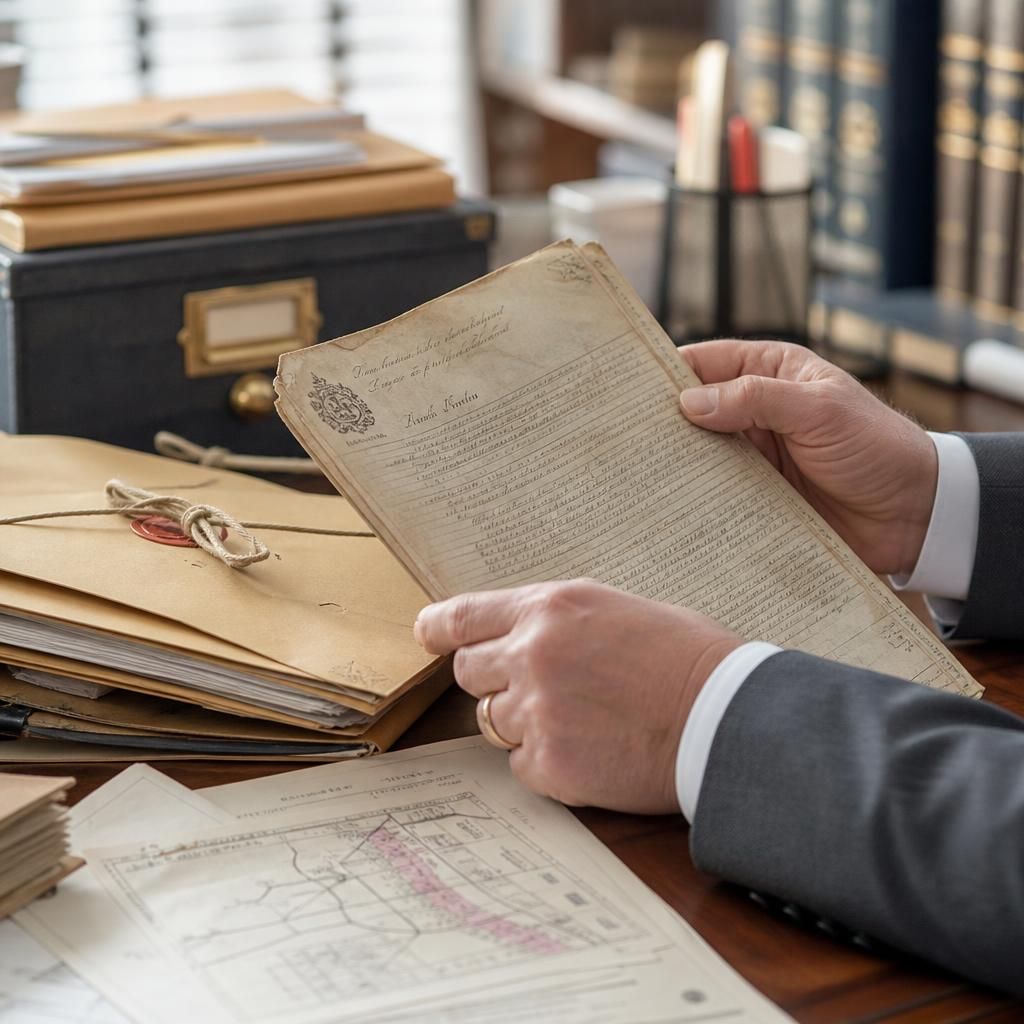
If the property is unregistered, your conveyancer may need the original title deeds and other documents showing the chain of ownership. These can include historic conveyances, mortgages that have been discharged, plans, rights affecting the land and statutory declarations explaining gaps or inconsistencies in the title.
Locate any deeds held by you, a previous solicitor, lender or storage provider and keep them secure until your conveyancer confirms they are no longer required. Missing or damaged deeds do not automatically prevent a sale, but alternative evidence may be needed to establish good title before the buyer can complete.