

How do cash property buyers determine the offer price for a house?
Cash property buyers typically determine a house offer by assessing its location, size, condition, legal status and recent comparable sales, then accounting for any renovation, selling and transaction costs. The resulting valuation reflects the property’s likely market value and the risks involved in buying it for cash.
A cash offer is usually a risk-adjusted purchase price rather than a simple estimate of what the property might achieve on the open market. The buyer forms a view of the property’s likely value, considers the uncertainty and capital required to acquire it, and then sets an amount that reflects the proposed transaction as a whole.
The process commonly begins with an initial desktop assessment. The buyer may review the property information supplied by the homeowner, publicly available records, photographs, floor plans and details of the reason for sale. This creates an early working valuation, but it is not normally final. A viewing, survey or legal review can alter the assessment if it reveals information that was not apparent from the initial description.
One important distinction is the difference between an asking price and an achieved price. Asking prices show what sellers hope to receive; completed transactions provide stronger evidence of what purchasers have actually paid. A buyer will usually give more weight to genuinely comparable completed sales, while allowing for differences such as tenure, layout, alterations, plot characteristics and the property’s appeal to likely purchasers.
The buyer then considers how readily the property could be resold or otherwise used. A home with broad appeal may be treated differently from one with a restricted market, unusual construction, limited access or an arrangement that requires specialist legal advice. This is not necessarily a judgement on the property itself. It reflects the level of uncertainty and the number of potential purchasers involved.
Risk is another part of the calculation. For example, an unresolved ownership question, missing paperwork, a complicated probate position or a dispute affecting the property may require additional investigation. The issue may not reduce the underlying value, but it can affect the price offered if it creates a possibility of delay, extra professional work or an unsuccessful transaction. The same principle applies where the buyer cannot yet verify important information.
The intended route after purchase can also influence the calculation. A buyer may assess whether the property is likely to be resold in its current form, improved before resale, retained as an investment or used for another permitted purpose. Each route has different costs, risks and timescales. The offer therefore reflects the buyer’s proposed use of the property, rather than being a guaranteed statement of its maximum possible market value.
A cash buyer may also allow for the financial commitment involved in taking ownership. This can include:
- capital required to acquire and hold the property;
- work needed to make the home suitable for its intended use;
- professional advice required to resolve unusual legal or technical matters;
- the risk that the eventual resale value differs from the initial assessment; and
- costs associated with marketing, resale or another exit route.
These considerations help explain why a cash offer can differ from an estate agent’s suggested market valuation. A traditional sale may expose a homeowner to marketing, viewings, a chain and the possibility of a buyer’s mortgage or survey affecting the transaction. A cash purchase is assessed on different terms, so the price should be considered alongside the conditions attached to it and the certainty the buyer is offering, rather than compared with an asking price alone.
Once the initial assessment is complete, the buyer may issue an offer subject to checks. The written offer should make clear whether it is a gross purchase price or the amount the seller is expected to receive after agreed deductions. It should also identify any assumptions, such as satisfactory title, vacant possession, planning information or confirmation of who has authority to sell. If those assumptions later prove inaccurate, the buyer may seek to revise the offer or withdraw.
Homeowners can assess the reasoning behind an offer by asking for a clear breakdown. Useful points to clarify include:
- which evidence was used to support the valuation;
- what assumptions have been made about the property and the seller’s legal position;
- whether any deductions are included and who is responsible for them;
- whether the offer is conditional on a survey, title investigation or other checks; and
- how long the offer remains open and what circumstances could lead to a change.
Where the owner has evidence that affects value, it should be supplied before the offer is finalised. Relevant material may include planning permissions, building regulation certificates, guarantees for completed work, tenancy information, title documents and details of known defects or disputes. Complete information gives the buyer a more reliable basis for pricing and reduces the chance that an undisclosed issue changes the assessment later.
In practice, a fair cash offer is one that can be traced to credible property evidence, makes its deductions and assumptions understandable, and distinguishes the estimated market value from the buyer’s risk and costs. Sellers should compare the net amount, the contractual terms and the level of certainty offered, and obtain independent legal or valuation advice where the circumstances are complex.
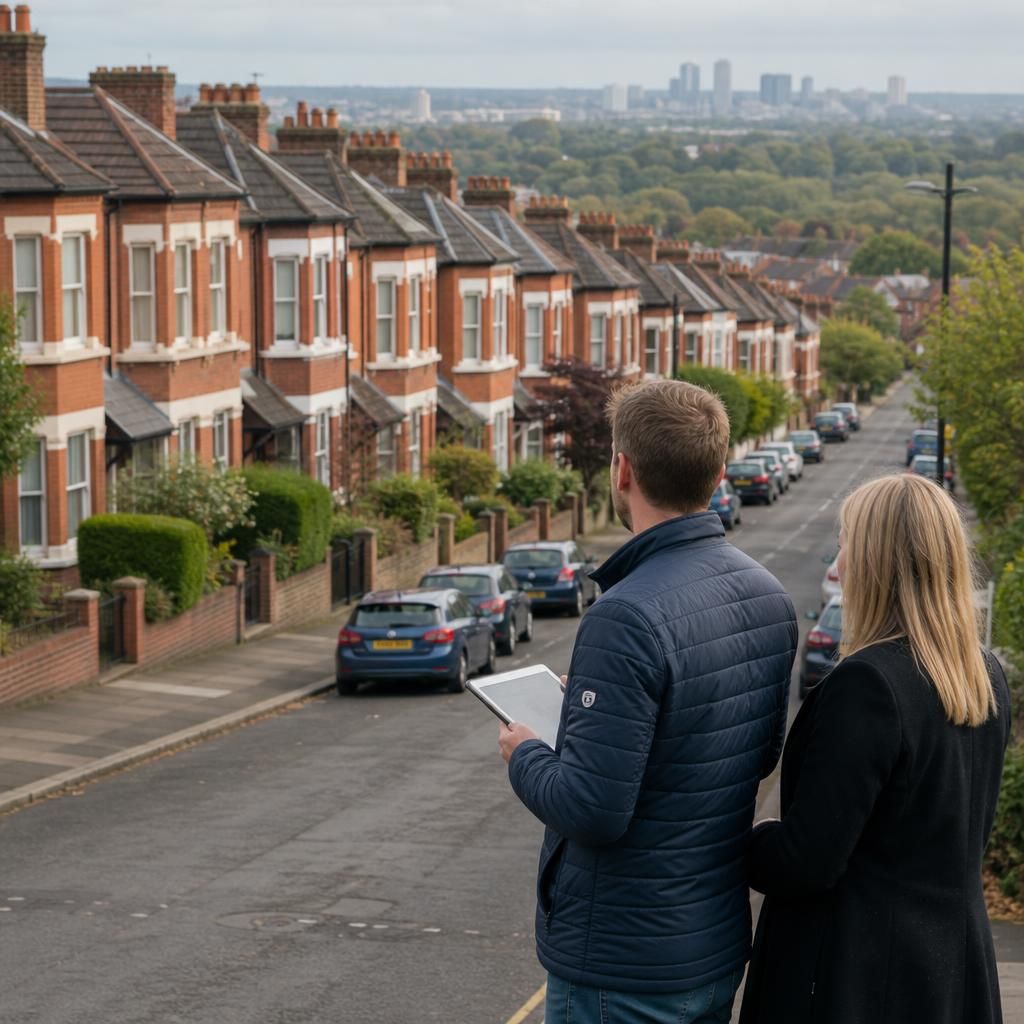
Local demand helps determine how confidently a cash buyer can price a house. The buyer may consider the number of similar properties available, the level of interest in that type of home and whether comparable properties are selling or remaining on the market. Strong demand can support a firmer valuation, while limited demand may lead to a more cautious offer.
Demand is assessed at a practical local level rather than across the UK as a whole. Factors such as transport links, schools, employment areas, amenities and the balance between houses available and likely purchasers can affect how easily a property may be resold. Two homes with similar floor areas can therefore attract different offers if their locations appeal to different groups of buyers.