

What are the tax implications when selling my house for cash?
Selling your house for cash does not usually create a separate tax regime: the key issue is whether the sale produces a taxable capital gain, particularly if the property is not wholly your main residence. Capital Gains Tax may apply after allowable costs and available reliefs are considered, while Stamp Duty Land Tax is generally a matter for the buyer rather than the seller.
The tax treatment of a cash house sale depends mainly on how you used the property, how long you owned it and whether you are selling as an individual, an estate or a business. Receiving the purchase money in cash or from a cash buyer does not, by itself, turn the proceeds into taxable income.
Capital Gains Tax and your main home
If the property has been your only or main residence throughout ownership, Private Residence Relief will often remove all or most of the gain from Capital Gains Tax. The position can become more complicated if you:
- owned another property and used this one as a second home;
- let out part or all of the property;
- used rooms or areas exclusively for business;
- were absent from the property for periods that do not qualify for relief; or
- bought the property partly as an investment rather than as a home.
Relief is assessed against the relevant period and the proportion of the property used as your main residence. Keeping evidence of occupation, addresses, electoral registration, council tax and utility records can help support your position if HMRC asks how the property was used.
Calculating a taxable gain
For a property that is not fully covered by Private Residence Relief, the starting point is usually the difference between the sale price and the purchase price. You can generally consider qualifying costs connected with acquiring, improving and disposing of the property, such as professional sale costs, legal fees and certain capital improvements. Ordinary repairs, maintenance, mortgage interest and general household expenditure do not automatically qualify as deductions from the gain.
Keep the completion statement, purchase and sale documents, invoices for qualifying improvements, professional fee records and evidence of any relief claimed. The relevant calculation is based on the legally recognised disposal and completion details, not simply the date on which a cash offer was made or accepted.
When Capital Gains Tax may need reporting
If you are a UK-resident individual and a taxable gain remains after reliefs and allowable deductions, you may need to report and pay the tax within HMRC’s required timeframe. For a UK residential property disposal that creates Capital Gains Tax to pay, the usual reporting deadline is 60 days after completion. This requirement does not normally apply where there is no taxable gain or the gain is fully covered by available reliefs, although other reporting obligations can still arise.
You should also take account of any available annual exempt amount, capital losses and gains or losses from other disposals in the same tax year. Tax rates, allowances and reporting rules can change, so use the current HMRC guidance or obtain advice for the tax year in which completion takes place.
Property received through probate or inheritance
A sale following an inheritance has a different starting point. The property is generally valued for inheritance tax purposes at the date of death, and that value is usually used as the acquisition value when working out a later capital gain for the estate or beneficiaries. A rise in value between the date of death and the eventual sale may therefore need to be considered.
The estate may have its own tax reporting obligations, particularly where the personal representatives sell the property. The will, probate valuation, ownership structure and distribution of the sale proceeds can all affect the outcome. Professional advice is sensible before exchanging contracts if the property is being sold by an executor or administrator.
Divorce, separation and transfers between spouses
Transfers between spouses or civil partners can have special Capital Gains Tax rules, but the timing of separation and the way the transfer is made matter. A transfer before sale is not automatically tax-free simply because it forms part of a divorce or separation agreement. The ownership history, residence history and any court order or formal agreement should be reviewed before deciding whether to transfer or sell.
Stamp Duty Land Tax and other transaction taxes
A seller does not normally pay Stamp Duty Land Tax on the disposal itself. However, buying another property after the sale can create a separate SDLT liability, and the amount can depend on whether you retain another property and whether the replacement purchase qualifies for any applicable treatment. The buyer may also ask for information about the property that affects their own tax position, but that does not usually make their SDLT your liability.
Ordinary residential sales by private individuals are not generally charged with VAT. Different rules may apply where the seller is a property developer, the property is used for a business, or the transaction involves land or a building with unusual VAT characteristics. In those situations, an accountant or property tax specialist should check the position before completion.
When income tax or corporation tax may apply
A one-off sale of a personally owned home is normally considered under capital gains rules rather than income tax. The analysis can change where buying and selling property forms a trade, the property was acquired with an intention to resell, or extensive development activity is involved. A company selling a property will generally need to consider corporation tax rather than the individual Capital Gains Tax rules, and taking money from the company can create further personal tax considerations.
Rental income earned before completion is separate from the tax treatment of the sale. Make sure rent, allowable property expenses and the date responsibility for the property ended are dealt with correctly in the relevant tax return.
Practical checks before accepting a cash offer
- Confirm who owns the property and whether any co-owner, trustee, executor or company is involved.
- Establish whether the property has always been your main residence and record any periods of letting, absence or business use.
- Gather purchase documents, improvement invoices and sale-related professional fees.
- Ask your conveyancer for a completion statement showing the sale proceeds and deductions separately.
- Check whether a Capital Gains Tax return is required and note the applicable reporting deadline.
- Keep the offer, contract, completion statement and tax calculation with your records, even if you believe no tax is due.
A cash sale can simplify the funding arrangements, but it does not remove the need to calculate the tax position accurately. If the property was inherited, jointly owned, rented, transferred during separation, held by a company or used for business, obtain advice from a qualified tax adviser before completion rather than relying on the fact that the buyer is paying in cash.
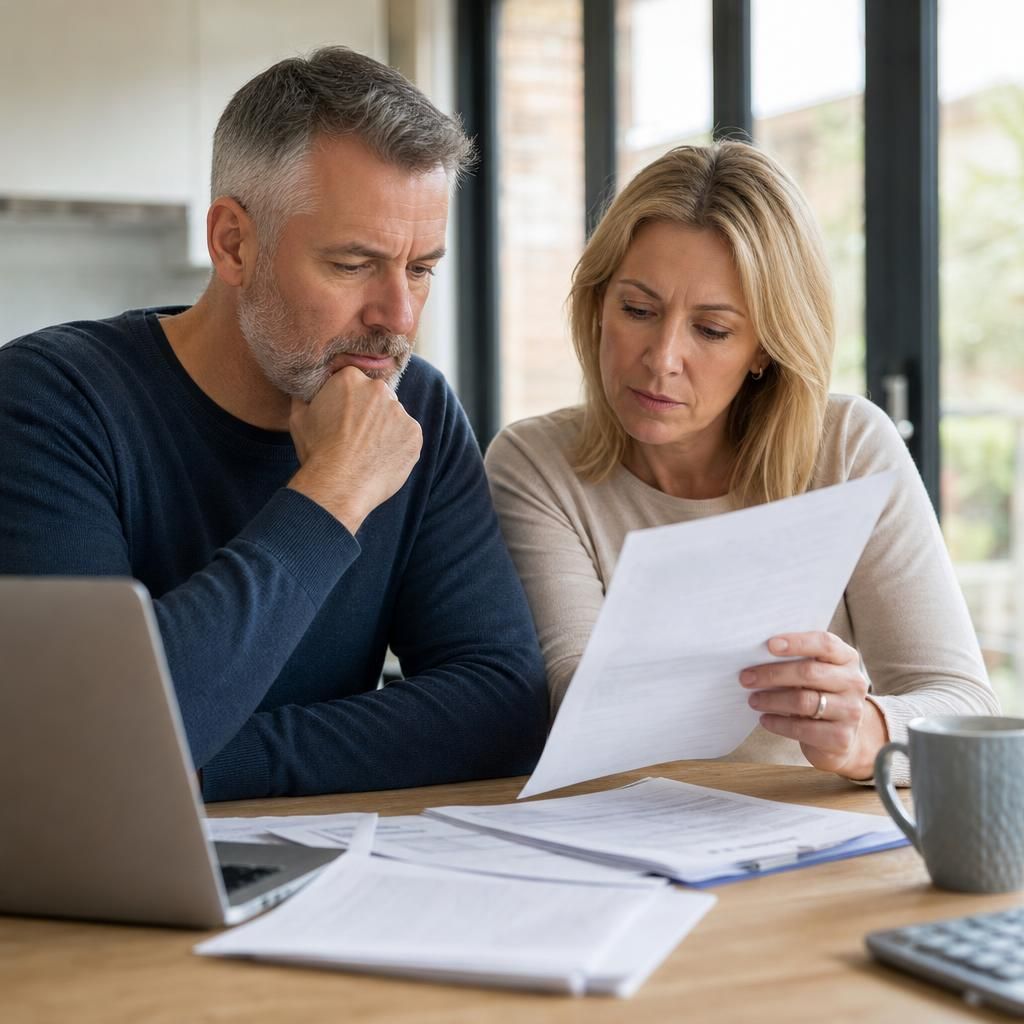
The amount offered by a cash buyer is not, by itself, the amount of taxable gain. For most private sales, the gain is worked out by comparing the legally agreed disposal proceeds with the property’s allowable acquisition and improvement costs, then applying any relevant reliefs. The buyer’s funding method does not determine the tax calculation.
Take particular care if the property is being transferred to a connected person, gifted, or sold for less than its market value as part of a wider arrangement. Special market-value rules may apply, meaning the figure used for tax purposes could differ from the money actually received. Keep the valuation evidence, offer correspondence and sale agreement together, and ask a tax adviser to review the transaction before completion where the agreed price is not an ordinary open-market price.