

What steps should I take if my house has structural issues before selling for cash?
Before selling a house with structural issues for cash, obtain an independent structural survey, gather any repair records and establish whether the problem is ongoing, historic or caused by subsidence. Disclose the known defects to the buyer, provide supporting reports, check how they affect the property’s value and use a conveyancer to ensure the sale documents accurately reflect its condition.
Before selling a house with structural issues for cash, establish the nature and seriousness of the defect, make the property safe, organise the relevant paperwork and give the buyer accurate information. You should then compare the likely cost and risk of repairing the problem with the value of selling the property in its present condition, while taking independent legal advice before committing to the transaction.
1. Identify the defect and any immediate risks
Structural problems can include movement in walls, roof or floor failure, settlement, defective foundations, retaining-wall problems, extensive cracking or deterioration affecting load-bearing elements. Not every crack indicates a serious structural defect, so avoid relying on visual assumptions or informal opinions. A suitably qualified building professional can help distinguish cosmetic damage from a problem that could affect stability, safety or insurability.
If there is a risk of falling masonry, unstable ceilings, water entering electrical areas or other hazards, restrict access and arrange suitable temporary measures. Do not conceal damage with fresh plaster, paint or other cosmetic work. Concealment can make the condition harder to assess and may create disputes after completion.
2. Check the property’s history and legal position
Find out whether alterations, extensions, underpinning, drainage works or foundation work were carried out during your ownership or earlier. Check your purchase file, title documents and local authority paperwork for references to notices, restrictions, guarantees or agreements affecting the property. Where work required planning permission or building regulations approval, look for the relevant decision notices, completion certificates or regularisation documents.
If the property is leasehold, review the lease for obligations concerning structural parts, alterations, insurance and contributions to major works. The freeholder or managing agent may hold information about previous movement, communal repairs or proposed works. A cash buyer’s solicitor will usually need these details to assess the legal and practical risks.
3. Review insurance and guarantees
Check buildings insurance documents and make a note of exclusions, excesses and any previous claims. Do not assume that a structural defect is covered simply because the property is insured. If the issue relates to specialist work, locate any transferable guarantees, engineer certificates, warranties or contractor documentation and confirm whether they can pass to a new owner.
Be careful when completing property information forms. Answer questions accurately and consistently, including questions about disputes, notices, damage, insurance claims and alterations. If you are uncertain about a legal answer, ask your conveyancer rather than guessing.
4. Obtain realistic repair information
Ask appropriately qualified contractors or engineers to explain what work may be needed, whether temporary protection is advisable and whether further investigation is required. Obtain written specifications and quotations where practical. A quotation is not the same as a final cost: hidden defects, access limitations and the need for temporary accommodation can affect the total.
Consider whether the work requires scaffolding, specialist equipment, planning consent, building control involvement or cooperation from a neighbour. These practical constraints matter to a cash buyer because they can influence the risk, timescale and funding required after purchase.
5. Decide whether to repair before marketing
Repairing before sale may make the property easier to insure or finance, but it can also involve substantial expenditure without guaranteeing that the full cost will be reflected in the selling price. Selling in its current condition may be more appropriate where the defect is complex, the property is difficult to insure or you do not want to manage the works. Compare the estimated repair cost, professional fees, holding costs and disruption with the price likely to be offered for the property as it stands.
If you choose to carry out work, retain invoices, completion documents, photographs and any professional sign-off. If you sell without completing the work, explain clearly what is known, what remains uncertain and what access or investigation the buyer may need.
6. Choose the right conveyancing route
Use a conveyancer who regularly handles residential sales involving defects, unusual title matters or properties being sold without conventional mortgage finance. Tell them about the structural issue at the outset. They can help prepare replies to enquiries, check title restrictions, deal with certificates and ensure that the contract does not inaccurately describe the property’s condition.
Do not rely on a cash buyer’s inspection as a substitute for your own legal advice. The buyer’s surveyor and solicitor work for the buyer, whereas your conveyancer protects your position and explains the legal effect of the contract.
7. Assess the cash offer carefully
Ask how the buyer has arrived at the offer and whether it is based on a purchase in the property’s present condition. Establish whether the offer is subject to survey findings, legal investigations, funding, a related sale or other conditions. Clarify which costs you are expected to pay and whether any later reduction could be proposed after inspection.
A cash purchase can remove the need for a mortgage lender’s valuation, but it does not remove the need for sensible due diligence. The buyer may still commission a survey, request specialist reports or renegotiate if information is missing or the defect appears more extensive than first understood.
8. Protect the transaction before exchange
Keep communications, reports and agreed points in writing. Make sure the contract identifies the correct property, fixtures and contents, completion arrangements and any agreed treatment of outstanding works. Do not treat a verbal offer as binding: in England and Wales, the sale is generally not legally binding until exchange of contracts, while procedures differ in Scotland.
Before exchange, confirm that you understand the agreed price, the buyer’s conditions, the consequences of failing to complete and what information must still be provided. Once the contract has been exchanged, withdrawing can have serious financial and legal consequences.
9. Prepare for completion and handover
Provide keys, access devices, guarantees and relevant certificates as agreed. Leave the property in the contractual condition and do not remove fixtures that are included in the sale. If the property is vacant or unsafe, tell the conveyancer and buyer so that access, insurance and security arrangements can be addressed properly.
The safest approach is to be transparent, document the condition carefully and obtain professional advice on both the defect and the sale contract. A cash buyer may be willing to consider a property requiring substantial work, but the quality and completeness of the information you provide will affect the buyer’s ability to assess the risk and proceed on informed terms.
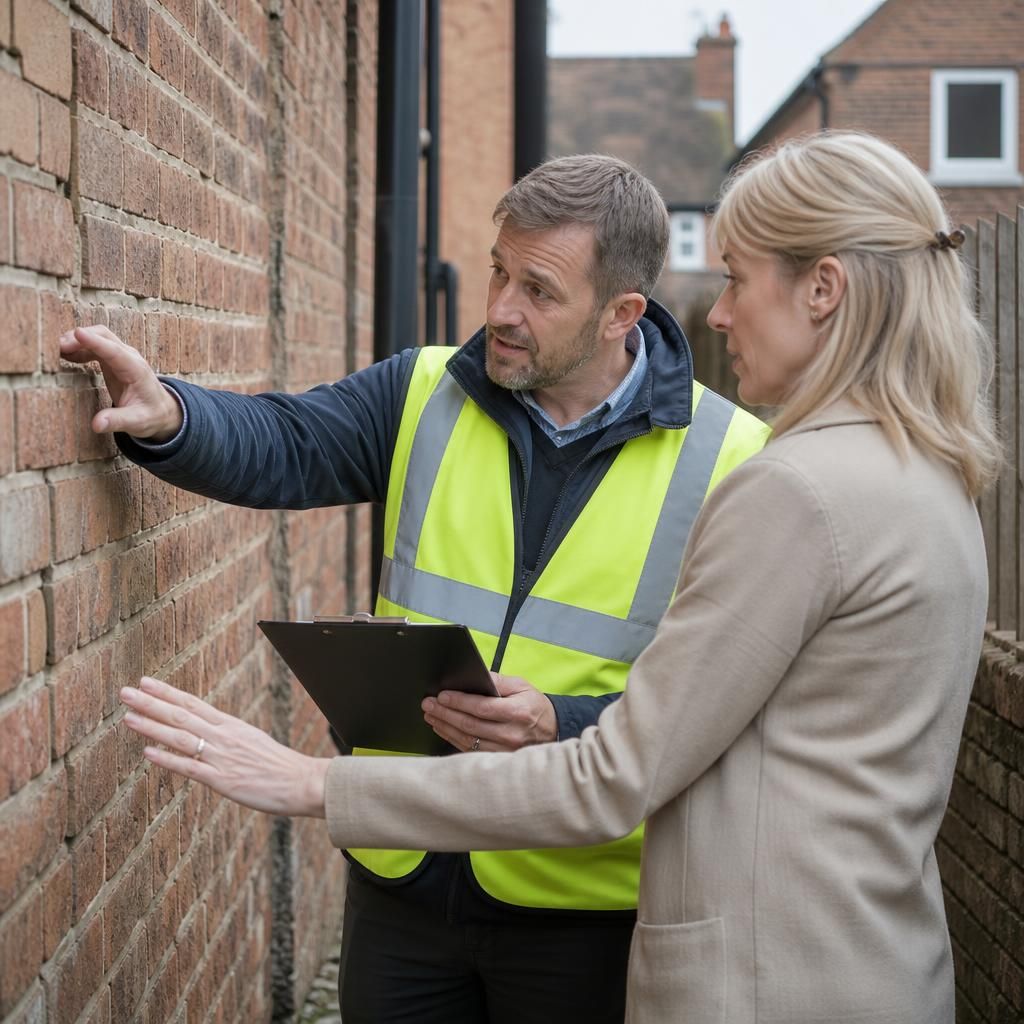
If the structural remedy could affect a shared wall, boundary structure or adjoining land, check the relevant access and neighbour-consent requirements before agreeing a cash sale. In England and Wales, work covered by the Party Wall etc. Act 1996 may require formal notices or an agreed surveyor; different rules apply in Scotland and Northern Ireland.
Ask your conveyancer whether any notices, awards, access agreements or disputes should be disclosed to the buyer. A buyer may accept responsibility for future works, but that arrangement should be recorded clearly in the contract rather than assumed. Keeping this issue separate from the general condition report helps prevent uncertainty about who can carry out the work and who bears any related obligation after completion.
Discuss Selling Your House with Structural Issues for Cash
If you are considering selling your property in its current condition, provide buyhousesfast.co.uk with the available details about the structural issue and the property. You can then discuss whether a cash purchase may be suitable before deciding how to proceed.