

What happens if there is no will when applying for a deed of probate?
If there is no will, the estate is handled under the rules of intestacy, so the appropriate application is usually for a Grant of Letters of Administration rather than a grant of probate. The person with priority under those rules—normally the deceased’s spouse, civil partner or closest eligible relative—can administer the estate and deal with an inherited property, subject to the required legal checks.
Where someone dies without a valid will, the estate is dealt with under the rules of intestacy. In England and Wales, the personal representative normally applies for a Grant of Letters of Administration, not a grant of probate. This grant confirms the administrator’s authority to collect the deceased’s assets, settle liabilities and deal with estate property.
The outcome depends on where the deceased was permanently resident and which assets are involved. England and Wales, Scotland and Northern Ireland have different succession and application procedures, so the relevant jurisdiction should be established before submitting an application. A solicitor or probate specialist may be appropriate where the estate includes property, overseas assets, business interests or family disputes.
Who can apply without a will?
Priority is generally given to the deceased’s surviving spouse or civil partner, followed by other relatives in an order set by intestacy legislation. The exact order and the number of people who may apply vary by jurisdiction. An eligible person may choose not to take the role, but this should be documented correctly; simply deciding not to deal with the estate is not always enough to remove their legal priority.
If there is no spouse, civil partner or eligible relative, or nobody able and willing to administer the estate, the appropriate public authority may become involved. This can happen where the deceased left no qualifying family or where the available applicants cannot take the grant. The estate is not automatically distributed according to informal family agreements.
What happens to the application?
- Identify the deceased’s domicile or relevant jurisdiction and establish whether a valid will exists. A will found after an application has started can change the correct procedure.
- Prepare the required details of the estate, including property, bank accounts, investments, personal possessions, debts and any jointly held assets.
- Establish whether inheritance tax or another estate tax obligation applies and complete the required reporting before, or as part of, the application process.
- Provide the death certificate, the applicant’s identification and other supporting documents requested by the probate authority. Additional evidence may be needed where names differ, a family relationship is unclear or the original will is later located.
- Submit the application for Letters of Administration and respond to any request for clarification or further evidence.
The grant does not decide every question about who should ultimately inherit. It gives the administrator authority to administer the estate, while the intestacy rules determine the beneficiaries. Before distributing assets, the administrator should identify debts, claims and liabilities, because distributing too early can create personal risk if creditors or other entitled parties are overlooked.
How does this affect an inherited property?
The administrator must confirm how the property was owned. A property held as joint tenants may pass automatically to the surviving joint owner, so it may not form part of the estate in the same way as a property owned solely by the deceased. A property held as tenants in common, or owned solely by the deceased, will usually require estate administration. The title register, ownership documents and any declaration of trust should be checked rather than relying on family assumptions.
For a solely owned property, the administrator will normally need to:
- secure and insure the property while the estate is being administered;
- obtain an accurate valuation for inheritance tax, estate accounts and any sale decision;
- check mortgage balances, restrictions, leases, planning matters and other title issues;
- decide whether the property should be sold or transferred to an entitled beneficiary;
- use a conveyancer to handle the sale and provide evidence of the administrator’s authority; and
- retain sale proceeds in the estate account until liabilities and distribution have been dealt with.
An administrator can usually prepare a property for sale and obtain marketing or purchase proposals before the grant is issued, but the conveyancing process must establish that the person signing the contract has authority to bind the estate. A buyer’s solicitor may request the grant, official title information, proof of the administrator’s identity and evidence that any required tax reporting has been completed. If the grant is still pending, this can affect the transaction timetable and should be explained accurately to all parties.
After a sale, the administrator must pay secured borrowing, property expenses, taxes, professional costs and other valid estate debts before distributing the remaining balance. Estate accounts should show the property valuation, sale price, costs, liabilities and payments to beneficiaries. If the net estate is to be divided between several people, written confirmation of the calculation can help reduce later disputes.
What if family members disagree?
Intestacy does not allow relatives to alter the statutory order simply because they believe a different division would be fairer. Beneficiaries may sometimes vary their entitlements through a formal arrangement, but tax and legal consequences must be considered before anything is signed. A dispute about the deceased’s family, the validity of a document, the ownership of the property or the administrator’s conduct should be referred to a specialist rather than handled informally.
Where a property needs to be sold to settle the estate, an administrator should keep a clear record of valuations, offers, instructions, expenses and communications with beneficiaries. If the property is difficult to sell through the usual route, a cash property buyer may be one option to investigate, but the administrator still needs independent legal and valuation advice. A buyer cannot remove the need for the correct grant, authority to sell, title checks or proper distribution of the estate.
The key point is that having no will changes the type of authority required and the people entitled to inherit; it does not remove the need for formal administration. Before applying, confirm the jurisdiction, search thoroughly for any will, identify the correct applicant and gather complete information about the estate. That preparation is particularly important where an inherited property is being considered for sale.
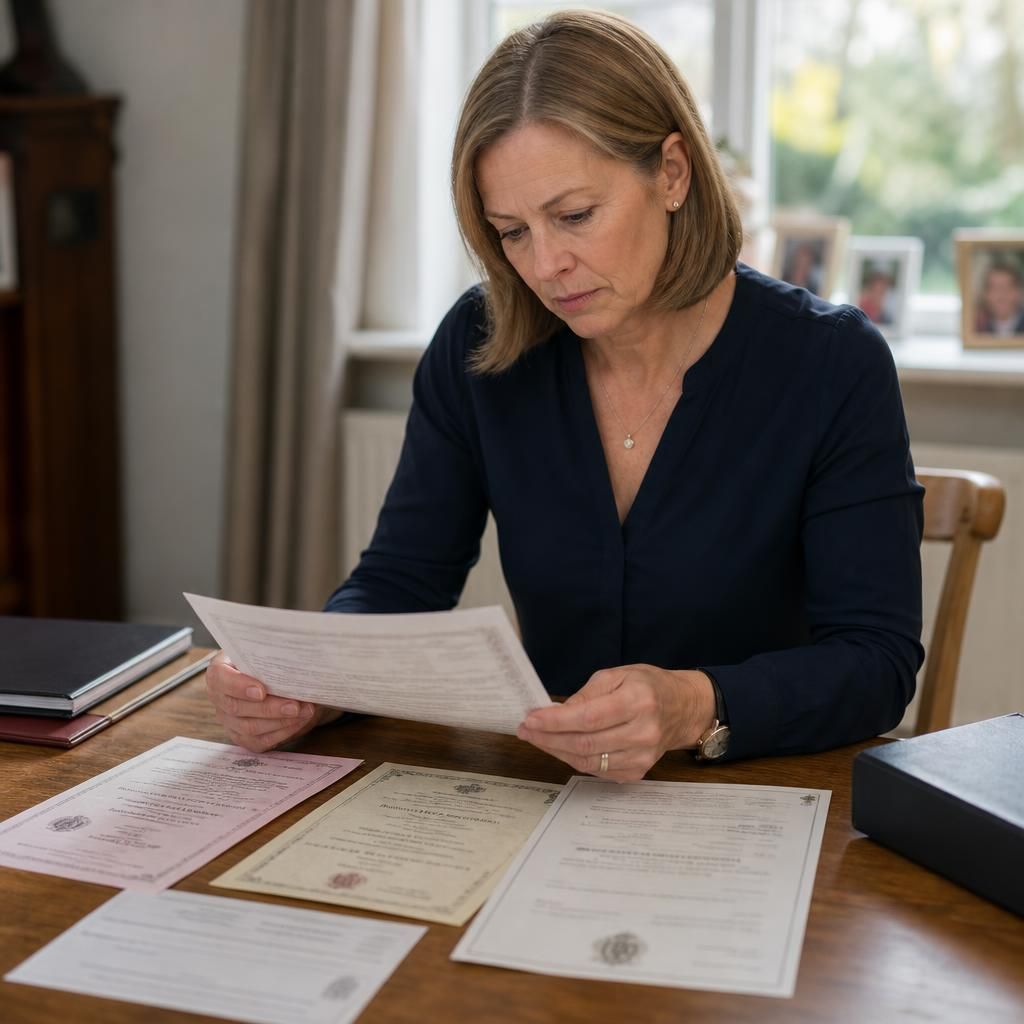
Without a will, proving the family relationship to the deceased can be an important part of the application. The applicant may need to provide documents such as birth, marriage, civil partnership, adoption or death certificates, together with evidence explaining any change of name. These records help establish the order of priority under the intestacy rules and identify the people who may inherit.
Check that names, dates and addresses are consistent across the documents before submitting the application. If a record is missing, an official copy or alternative evidence may be needed. Where the family history is complicated, obtaining specialist probate advice can help prevent the application or a later property transaction being delayed by questions about entitlement.