

What are the benefits of maintaining utilities in a probate property?
Maintaining utilities in a probate property helps prevent damage caused by freezing pipes, leaks, damp and inadequate ventilation. It can also support insurance compliance, allow essential inspections and keep the property in a suitable condition for valuation, marketing or sale.
Keeping essential utilities connected in a probate property supports the practical administration of the estate, preserves access to important services and reduces avoidable disruption. The aim is not necessarily to leave every service running at full capacity, but to assess what the property needs and manage each supply safely while ownership and responsibility are being resolved.
Key benefits include:
- Supporting security measures: Electricity may be needed for intruder alarms, security lighting, cameras, intercoms or remote monitoring equipment. A functioning supply can make it easier to identify unauthorised access and give the personal representatives greater oversight of the property.
- Making visits safer and more practical: Lighting and electrical power help executors, contractors and authorised visitors enter, inspect and work in the property without relying on torches or temporary equipment. This is particularly useful when clearing belongings, taking meter readings or arranging essential maintenance.
- Allowing necessary work to take place: Tradespeople may need electricity or water to carry out cleaning, plumbing, electrical repairs, gardening work or clearance. Keeping the relevant services available can avoid delays caused by arranging temporary supplies or reconnecting them before each task.
- Preserving access to communications: A live electricity supply can support routers, telephone equipment and connected devices where these are needed for monitoring the property or communicating with contractors. Any communications service that is no longer required should still be reviewed rather than left running without purpose.
- Reducing administrative complications: Closing accounts immediately can create reconnection charges, appointment requirements and additional correspondence if the property later needs a live supply. Keeping accounts properly managed during the probate process can make responsibility clearer and help the executors maintain an accurate record of estate expenses.
- Providing reliable consumption records: Regular meter readings establish what was used before and after the date of death and help identify unusual consumption. This information can assist when notifying suppliers, querying bills or allocating utility costs to the estate.
Utilities should be managed rather than simply left unattended. The executor or administrator should contact each supplier, explain that the property is part of an estate and confirm who is responsible for the account. Suppliers will usually require the property address, the date of death, a meter reading and details of the person dealing with the estate. Keeping copies of bills, readings and correspondence provides a useful audit trail.
Electricity is often retained where alarms, lighting or other essential equipment need to operate. Unnecessary appliances should be switched off at the socket, and portable devices should not be left connected without supervision. Water may be required for sanitation or cleaning, but the stopcock and internal plumbing should be checked if the building will be unoccupied. A plumber can advise whether part of the system should be isolated.
Gas requires particular caution. If there is no operational need for a gas supply, the responsible person should obtain suitable professional advice about isolation. Gas appliances must not be altered, disconnected or recommissioned by an unqualified person. Any future work involving the gas installation should be completed by an appropriately registered engineer.
The decision should also take account of the property’s condition, its security arrangements, the likely duration of the probate process and the terms of any existing policy. Some insurers may specify how heating, water, alarms or inspections are to be managed, so the policy documents and insurer’s instructions should be checked before changing a supply. Maintaining a service that is not needed can add cost, while disconnecting one that supports security or essential work can create practical problems.
A sensible approach is to create a utility schedule listing each service, the supplier, account reference, meter location, current reading, purpose and agreed action. Review it whenever responsibility changes or work is completed. This gives the estate’s representatives a controlled way to retain useful services, remove unnecessary ones and demonstrate how utility decisions were made.
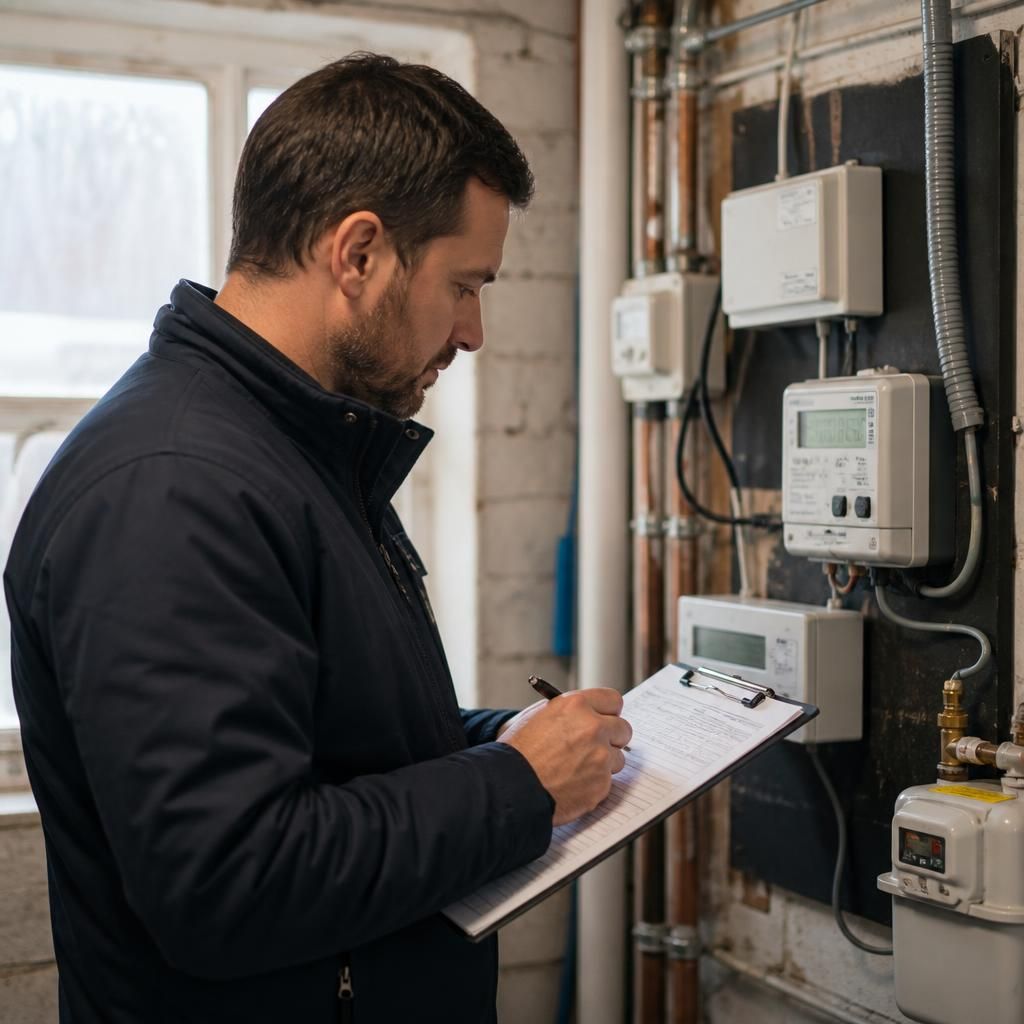
Maintaining essential utilities can also help demonstrate that the probate property has been responsibly managed if an insured incident occurs. Records showing supplier notifications, meter readings, inspections and agreed actions provide a clear timeline for the personal representatives and insurer. This can help establish when responsibility changed, what precautions were taken and whether the property was being used, inspected or left vacant.
Utility arrangements should therefore be recorded alongside the insurance policy and property inventory. If circumstances change—for example, a new representative takes over or contractors begin work—the insurer and relevant suppliers should be updated where required. Keeping these records does not replace compliance with policy conditions, but it reduces uncertainty when the estate needs to deal with damage, disputed bills or questions about the property’s management.