

What steps should be taken to prepare a probate property for insurance eligibility?
To prepare a probate property for insurance cover, confirm the legal authority to arrange insurance, provide the insurer with accurate details about the home and its occupancy, and disclose that it is undergoing probate. Secure the property, address obvious maintenance and safety issues, record its condition with photographs, and follow any requirements for inspections, alarms, utility checks or regular visits set by the insurer.
Preparing a probate property for insurance eligibility involves giving the insurer enough evidence to assess the risk, confirming who has authority to arrange cover and putting the property’s records and management arrangements in order. The aim is to demonstrate that the home is identifiable, responsibly managed and suitable for the type of policy being requested.
1. Establish the policyholder and insurable interest
Before completing an application, establish whether the policy should be arranged in the name of the personal representatives, the estate, a beneficiary, or another party with a recognised interest in the property. The correct arrangement can depend on whether the deceased owned the home solely or jointly, whether probate has been granted and whether ownership is expected to transfer or the property is due to be sold.
Keep relevant evidence available, such as the death certificate, the will, letters of administration or grant of probate where issued, and documents showing ownership. An insurer may ask for this information to confirm that the applicant is entitled to insure the building. If the legal position is uncertain, obtain advice from the solicitor handling the estate rather than guessing on the proposal form.
2. Assemble a complete property file
A clear property file helps the insurer evaluate the risk and reduces the possibility of inconsistent information. It should contain:
- the full address, property type and approximate construction details;
- the purchase or probate valuation, where relevant, and any available rebuilding-cost assessment;
- details of outbuildings, garages, boundary structures and land included with the property;
- information about previous insurance, claims, subsidence, flooding or other material damage;
- records of significant alterations, conversions or extensions; and
- details of known defects, disputes, planning issues or restrictions affecting the building.
Insurance is generally based on the cost of rebuilding rather than the property’s market value. The application should therefore distinguish between the value of the land and home as an asset and the estimated cost of reconstructing the buildings, including professional fees, demolition and clearance where the policy or valuation method requires them.
3. Check the intended use and occupancy position
Describe how the property will be used during the estate administration. For example, it may be entirely unoccupied, used for occasional access by representatives, occupied by a beneficiary under an informal arrangement, or undergoing clearance before sale. These circumstances can lead to different underwriting decisions.
Do not describe a property as unoccupied if someone is living there, even temporarily. Conversely, do not assume that occasional visits amount to normal occupancy. Explain the actual arrangement, who has access and whether any furniture, valuable contents or animals remain in the building. A mismatch between the proposal and the facts can affect the validity of cover or a later claim.
4. Identify risks that need specialist consideration
Prepare a written list of unusual features before approaching an insurer. Relevant matters may include a flat roof, listed-building status, thatched construction, previous structural movement, water damage, extensive renovation, an open or unoccupied neighbouring property, or a history of vandalism. Also disclose whether the home is being cleared, renovated, marketed for sale or awaiting a court or family decision.
Where building work is planned, ordinary property insurance may not be the right product for the entire period. Contractors may need their own liability cover, and structural alterations can require separate terms. Explain what work is proposed, who will carry it out and whether the building will remain usable while work takes place.
5. Confirm responsibilities for the building
Write down who is responsible for arranging contractors, dealing with damage, authorising expenditure and communicating with the insurer. This is particularly important where several executors or beneficiaries are involved. Agreeing a single point of contact can prevent missed requests and ensure that changes to the risk are reported consistently.
Where the property is leasehold, obtain the relevant lease and check whether the freeholder or managing agent arranges buildings insurance. Duplicating cover can create confusion, while failing to identify a block policy may leave questions about responsibility for communal areas, external walls or shared services.
6. Review finance and third-party requirements
If a mortgage, secured loan or other charge remains against the property, check the lender’s insurance conditions. The lender may require the building to be insured for a specified level, named or noted on the policy, or covered under particular terms. The estate’s solicitor can help establish what must be supplied to the lender and whether any change in ownership or borrower status must be reported.
Freeholders, leaseholders, managing agents and contractors may also request evidence of insurance. Keep the policy schedule, endorsements and correspondence together so that the estate can demonstrate the scope of cover when required.
7. Make the application internally consistent
Read the completed proposal form against the property file before submitting it. Check that the declared construction, rebuilding value, occupancy, claims history and use all match the available documents. If an answer is uncertain, mark it for clarification rather than providing an estimate that could later be treated as a firm statement.
Ask the insurer to confirm important conditions in writing, particularly any requirements connected with renovation, unoccupied periods, water systems, heating, inspections, excesses and notification of changes. The policy wording and endorsements take priority over general descriptions given during an enquiry.
8. Keep evidence after cover is arranged
Eligibility is not a one-off exercise. Retain the application, schedule, policy wording, endorsements, invoices and written instructions from the insurer. Record material changes such as a new occupant, building work, a change in the personal representatives or a decision to leave the property furnished. Notify the insurer before the change where the policy requires it.
A well-organised file gives the personal representatives a reliable audit trail and makes it easier to demonstrate that the estate followed the policy conditions. If an insurer declines the risk or offers restricted terms, ask which specific feature caused the decision and correct factual errors before seeking a different quotation.
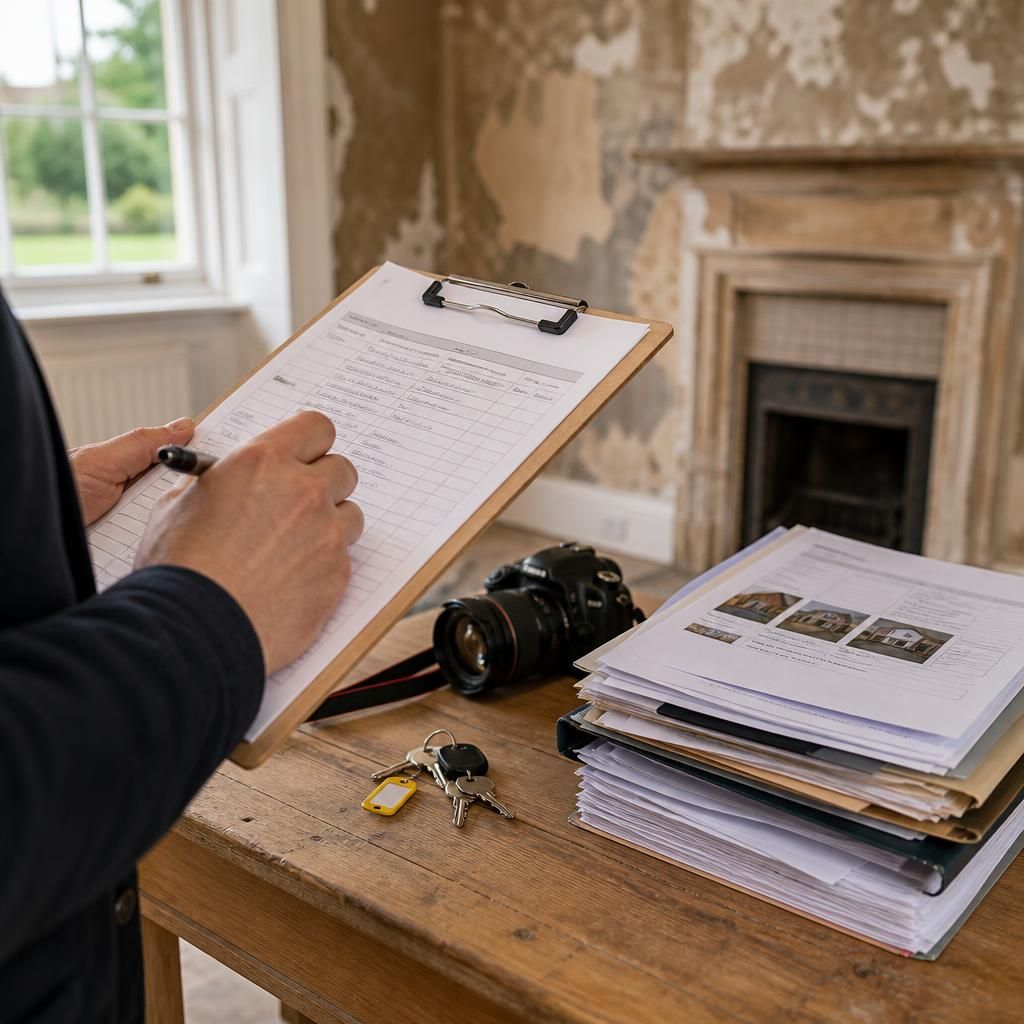
A probate property is easier to assess for insurance when its condition and management can be evidenced, rather than described only in general terms. Create a dated property log showing each inspection, the person attending, any change noticed and the action taken. Include meter readings, contractor invoices, alarm or locksmith records, and photographs where they help prove that an issue was identified and addressed.
Keep this evidence with the policy documents and relate it to any conditions or endorsements in the schedule. For example, if the insurer requires a particular security measure or asks to be notified about a defect, retain the relevant certificate, receipt or written notification. This creates a clear record for the personal representatives and can help establish that the property was managed in line with the agreed insurance terms.