

How can a buyer evaluate the risks and benefits of purchasing a probate property?
Evaluate a probate property by weighing its purchase price and potential investment value against legal, financial and practical risks, including the executor’s authority, title issues, property condition, outstanding liabilities and possible delays. Independent legal advice, conveyancing checks, valuation and a suitable survey can help establish whether the likely benefits justify the identified risks.
A buyer should evaluate a probate property by testing whether the transaction is legally authorised, practically deliverable and financially worthwhile after allowing for uncertainty. The advertised price alone is not enough. A sound assessment considers the seller’s authority, the property’s actual saleability, the time and cost of completing the purchase, and the likely value and usability of the property once acquired.
Probate sales can offer useful opportunities, but they are not automatically bargains. The deceased owner’s representatives may be motivated to realise the estate, and the property may have been unoccupied or poorly maintained. Conversely, several beneficiaries, unresolved estate matters or a lack of preparation can make the sale less straightforward than an ordinary transaction.
Start by identifying the transaction’s stage. Ask whether the owner has died recently, whether an executor or administrator has been appointed, and whether the relevant authority to deal with the estate has been obtained or applied for. In England and Wales, this will commonly involve a grant of probate or letters of administration. Scotland uses confirmation, while Northern Ireland has its own probate procedure. These differences affect the evidence a conveyancer will request and the point at which the personal representative can safely commit the estate to a sale.
A buyer should establish whether the person negotiating the sale has authority to do so and whether every required personal representative will sign the contract. If there is more than one executor, a missing signature can prevent exchange or delay completion. Where an executor has reserved power, renounced their role or is acting under a different arrangement, the legal position should be confirmed rather than inferred from an estate agent’s description.
Assess the risk of delay separately from the quality of the property. A property may be suitable and fairly priced but still create problems if the estate is not ready to exchange contracts. Relevant questions include:
- Has the estate identified all beneficiaries and dealt with any competing claims?
- Are there outstanding questions about the deceased owner’s will or intestacy?
- Has the property been registered correctly, and can the seller prove ownership?
- Are there restrictions, charges, notices or other entries that need to be addressed?
- Is vacant possession expected, or does someone live at the property?
- Are there tenants, informal occupiers, relatives or carers whose rights may affect possession?
- Is the sale dependent on a separate transaction or on funds becoming available within the estate?
These issues do not necessarily make a purchase unsuitable. They indicate where the buyer needs written confirmation, specialist advice or additional time in the transaction plan. A buyer should avoid treating informal assurances as a substitute for evidence in the contract and conveyancing file.
Consider the property’s condition using evidence rather than appearance. Probate homes may contain belongings that have not yet been removed, may have been empty for a period, or may have had limited maintenance. This can conceal damp, roof defects, plumbing problems, electrical issues, drainage faults, timber decay or damage caused by freezing conditions. A viewing is useful for identifying obvious concerns, but it cannot establish the full scope or cost of remedial work.
Compare the likely purchase and improvement costs with the property’s intended use. If the plan is to live in it, consider layout, location, accessibility and the cost of making it suitable for occupation. If the plan is to let or resell it, consider whether the finished property will meet relevant safety, building control and energy requirements. Obtain professional advice where defects or alterations raise technical questions, and do not assume that an estate’s need to sell makes repair risks less significant.
Separate known costs from unknown costs. A robust evaluation records the expenses already identified and then adds a contingency for issues that cannot yet be quantified. Potential items include clearance, storage, security, insurance, utilities, remedial works, professional fees, planning or building control matters, and the cost of holding the property if completion or refurbishment takes longer than expected. The relevant comparison is not simply the agreed price against an estimated market value; it is the total expected commitment against the property’s realistic end value and purpose.
Tax treatment can also affect the result. The buyer should obtain current advice on transaction taxes, ownership structure, rental income, future disposal and any tax consequences of refurbishment or resale. Estate-related tax obligations are generally matters for the personal representatives, but they can still affect the transaction if funds, clearances or adjustments are needed before completion.
Review the benefits in practical terms. A probate purchase may be attractive when:
- the property meets the buyer’s intended use without excessive alteration;
- the estate has a clear authority to sell and a well-organised conveyancing file;
- the sale terms provide sufficient protection for the buyer;
- the property’s condition has been investigated adequately; and
- the price remains acceptable after allowing for works, professional costs and uncertainty.
There may also be scope to negotiate practical arrangements, such as the removal of contents, access for contractors or a completion timetable that suits the estate. Such arrangements should be recorded formally. A buyer should not rely on an assumption that furniture, personal possessions or unwanted materials will be cleared unless the contract or a written agreement deals with them.
Check whether the purchase can be funded and insured. Mortgage lenders may impose conditions relating to the grant, title, property condition, lease length, structural defects or intended use. Some forms of disrepair can affect both lending and insurance. A cash buyer avoids mortgage approval as one source of uncertainty, but still needs to establish that the property can be insured, secured and legally transferred. Cash does not remove title, condition, possession or estate-administration risks.
Before committing, prepare a simple risk register. Record each concern, the evidence available, who must resolve it, the expected cost or delay, and the consequence if it cannot be resolved. Classify each item as acceptable, requiring protection in the contract, requiring a price adjustment, or serious enough to stop the purchase. This prevents a low asking price or emotional pressure from outweighing unresolved defects.
Independent advice is particularly important where the estate has several beneficiaries, the title is unusual, the property is occupied, the seller’s authority is uncertain or substantial works are required. A conveyancer can explain the legal position and contract protections, while a suitably qualified surveyor or other specialist can assess physical risks. The buyer should make the final decision only after comparing the evidence with their own budget, timescale, intended use and tolerance for uncertainty.
The strongest probate purchases are not necessarily those with the lowest price. They are transactions where authority is demonstrable, possession and title are understood, condition and costs have been investigated, and the remaining uncertainties are proportionate to the potential benefit.
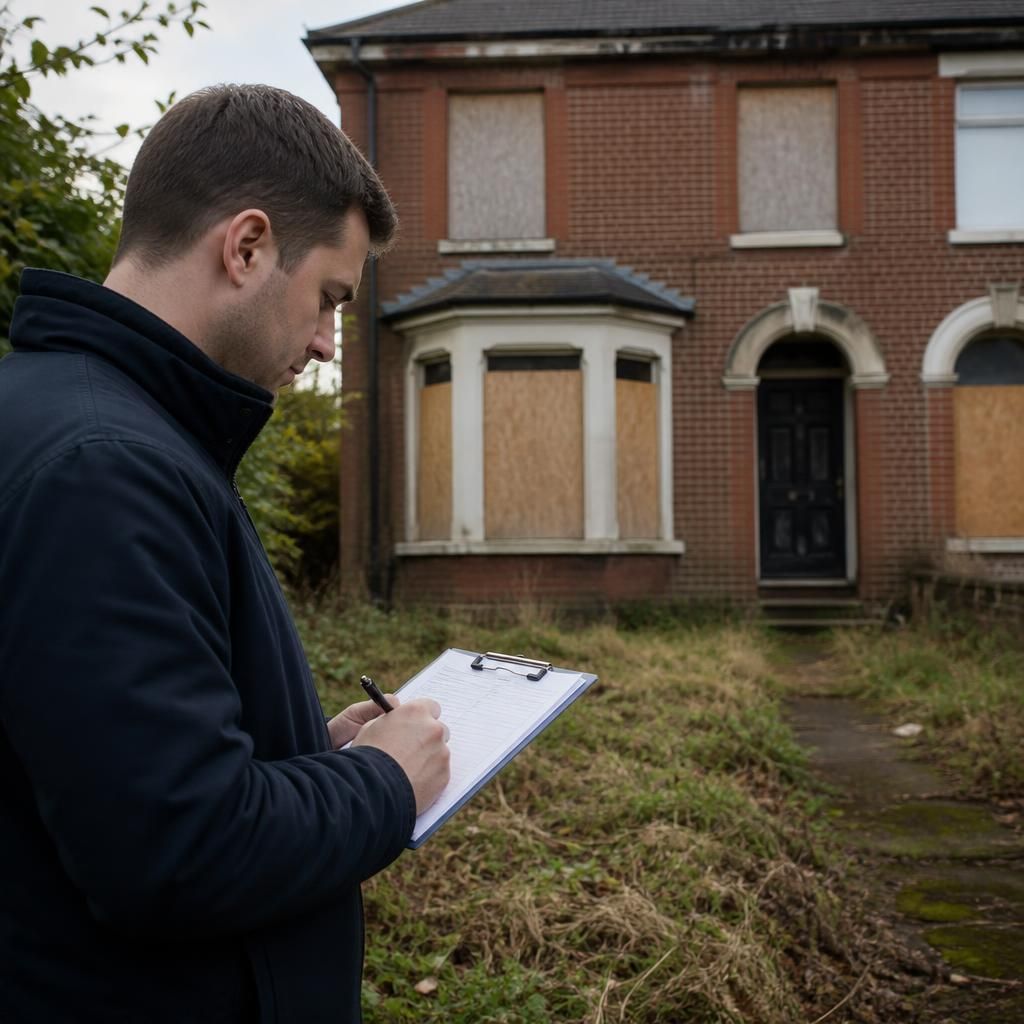
Check insurability before committing
Insurance can determine whether a probate purchase is workable, particularly if the property has been vacant, shows signs of damage or will undergo substantial refurbishment. Obtain a quotation based on the property’s actual condition and occupancy, disclose relevant defects, and check exclusions for escape of water, unoccupied periods and renovation work. Confirm from which point the buyer is responsible under the contract and arrange suitable buildings cover accordingly. If acceptable cover cannot be obtained on reasonable terms, that risk should be reflected in the price or treated as a reason to reconsider the purchase.