

What are the tax implications or obligations to consider when selling a probate property?
Selling a probate property can involve Capital Gains Tax on any increase in value between the date of death and the sale, while Inheritance Tax is generally assessed on the deceased’s estate rather than the sale itself. Executors may also need to account for tax on rental income or other income generated by the estate and should confirm reporting and payment obligations with a probate or tax adviser.
The tax position when selling a probate property is dealt with through the estate’s personal representatives, and may later affect the beneficiaries who receive the proceeds. The sale price, the property’s condition and use, the costs of sale, the estate’s other assets and the circumstances of each beneficiary can all affect the final obligations. The executor should establish which taxes apply before distributing the proceeds.
Capital Gains Tax records and calculations
Although the main tax issue is whether the estate has made a gain, the calculation depends on accurate evidence. Executors should retain:
- the valuation accepted for probate purposes;
- the completion statement and contract for the sale;
- estate agent, solicitor, auction and other sale-related invoices;
- invoices for qualifying improvements, rather than routine repairs or maintenance; and
- documents showing any changes in ownership, occupation or use.
Only costs that meet the relevant tax rules can be deducted, so an executor should not assume that every expense connected with the property reduces the taxable amount. A property that was rented, occupied by someone connected with the deceased or used partly for business may require more detailed analysis.
The personal representatives should also check whether the estate has any capital losses that can be used under the applicable rules. If the property is sold for less than its relevant tax value, the resulting loss may not simply be ignored, but claiming or carrying it forward can involve specific reporting requirements. A tax adviser can check the treatment alongside gains on other estate assets.
Tax returns and HMRC administration
An estate may need to be registered with HMRC and may have to submit an estate tax return, depending on the income and gains arising during the administration period. The personal representatives remain responsible for identifying taxable amounts, keeping the estate’s tax records separate from their own affairs and making any required payments from estate funds. The fact that a property sale has completed does not necessarily mean that all tax administration is finished.
Where HMRC has issued notices, requested information or opened an enquiry, the executor should deal with those matters before distributing the estate. Distributing money too early can create practical difficulties if a later tax liability leaves insufficient funds to settle it.
Inheritance Tax and the probate valuation
The property valuation used for the estate should be realistic and supported by evidence. If the eventual sale price is materially different from the valuation, the executor should ask the probate solicitor or tax adviser whether the difference needs to be reported or whether the estate’s tax calculations should be reviewed. A sale price is not automatically proof that the original valuation was wrong, as marketing conditions, repairs, buyer demand and a forced sale can all affect the result.
Any reliefs, exemptions, debts or transfers relevant to the wider estate should be reviewed as part of the estate’s overall tax position. The property cannot be assessed in isolation where its value affects the estate’s total assets or the distribution between beneficiaries.
Stamp Duty Land Tax and similar transaction taxes
An executor selling a residential property does not normally pay Stamp Duty Land Tax simply because the property is being sold. SDLT is generally a tax considered by the purchaser on the acquisition, rather than a charge deducted from the seller’s proceeds. Different rules may apply if the personal representatives acquire another property, transfer an interest as part of a restructuring or sell a mixed-use or non-residential property.
Scotland and Wales have their own property transaction tax systems, so the location and nature of the property should be checked. The solicitor handling completion will usually identify transaction-tax issues affecting the contract, but the executor remains responsible for giving accurate information about the estate and the transaction.
VAT and property-related costs
A normal sale of a private residential dwelling is commonly outside the scope of VAT or treated as exempt, but the treatment can differ for commercial premises, development land, holiday accommodation, a property used for a business or a building subject to an option to tax. VAT may also appear on professional invoices connected with the sale. Whether that VAT can be recovered depends on the estate’s activities and the nature of the property; it should not automatically be treated as an additional amount available from HMRC.
Tax consequences for beneficiaries
Once the property has been sold and the net proceeds are distributed, the distribution is normally treated as an inheritance rather than ordinary earnings. However, a beneficiary who receives the property instead of cash, or who later sells an inherited property, may have separate tax considerations. The beneficiary should keep the estate’s valuation, transfer documents and evidence of expenses, because those records may be needed for a later disposal or tax return.
Where several beneficiaries receive different assets or agree to vary the distribution, the legal and tax effect can be more complicated. A deed of variation, transfer to a beneficiary or sale before distribution may produce different outcomes, so the proposed arrangement should be reviewed before it is completed.
Practical steps before completion
- Confirm who has authority to sign the sale contract and receive the proceeds.
- Ask the conveyancer for a complete completion statement showing the sale price, deductions and net amount.
- Separate sale proceeds from personal funds and retain all invoices and valuations.
- Check whether the estate needs registration, a tax return or further information supplied to HMRC.
- Review whether the sale price changes any valuation or calculation already made for the estate.
- Obtain advice before distributing the balance if tax liabilities, disputes, multiple properties or unusual property use are involved.
Tax rules can change, and the correct treatment depends on the estate’s particular facts. A probate solicitor can deal with authority, ownership and completion, while a tax adviser or accountant can confirm calculations, reporting and payment obligations before the estate is finalised.
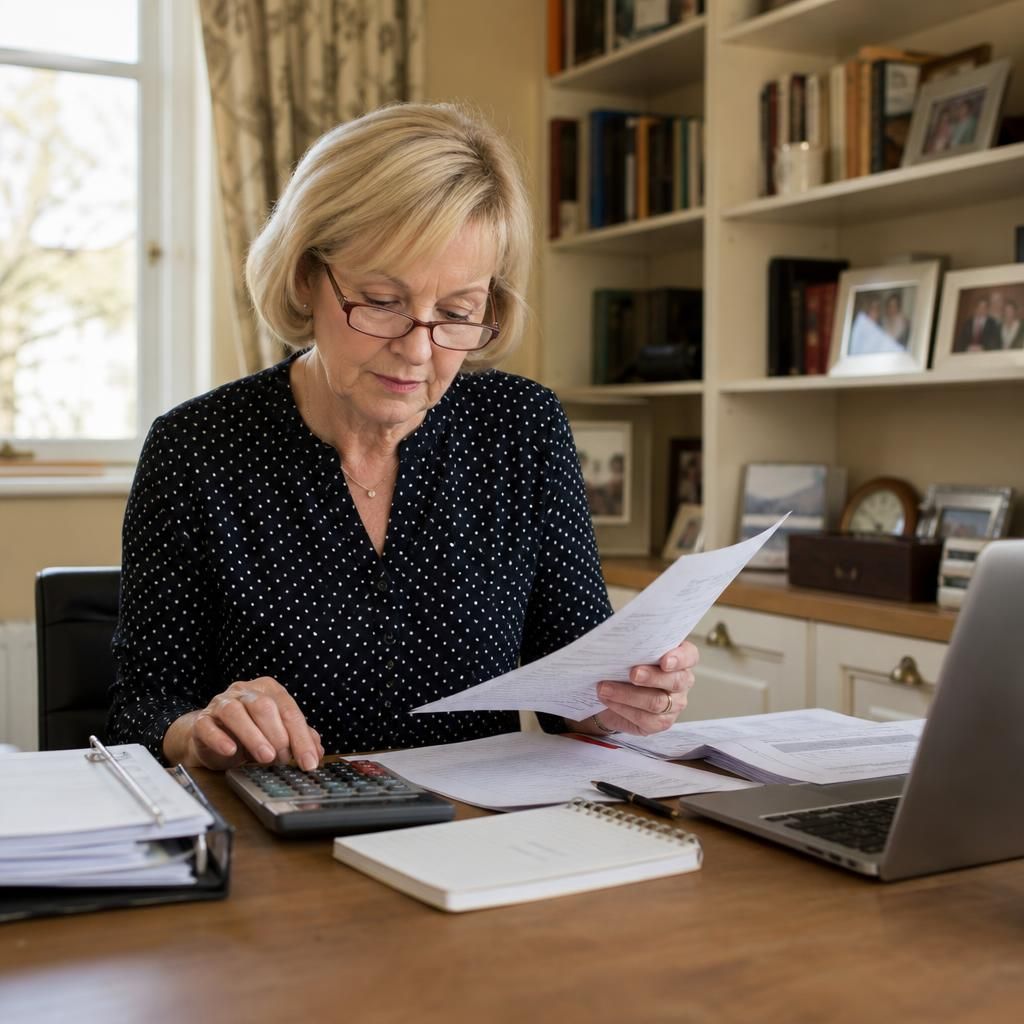
Rental income received from a probate property before its sale is generally considered separately from any Capital Gains Tax arising on the disposal. The estate may need to report this income during the administration period, even if the property is only let temporarily while a sale is being arranged.
Personal representatives should keep a clear record of rent received, tenancy agreements, management charges, insurance, repairs and other property expenses. Whether an expense is deductible depends on the applicable tax rules and the nature of the cost, so routine maintenance should not be treated in the same way as improvements. The estate’s tax adviser can confirm the correct treatment and whether further information must be provided to HMRC.