

What factors influence the market value of an inherited property?
An inherited property’s market value is mainly influenced by its location, size, layout, condition, tenure, local demand and the prices achieved by comparable nearby homes. Its legal status, title issues, planning restrictions, occupancy and the need for repairs can also affect what buyers are prepared to pay.
An inherited property’s market value is the price it could reasonably achieve between a willing seller and a willing buyer on a specified date, after proper marketing and with both parties having relevant information. The inheritance itself does not automatically increase or reduce that value. The figure is shaped by the property’s saleability, the evidence available to support the valuation, the type of buyer likely to purchase it and the terms on which it can be sold.
The valuation date matters
Property values change over time, so a valuation prepared for probate, inheritance tax or a later sale may produce different results. A probate valuation usually considers the property’s open-market value at the date of death, whereas a selling price reflects conditions when the property is marketed. Changes in buyer demand, lending conditions and local transaction levels can therefore make an earlier valuation unsuitable as a guide to the current asking price.
Comparable evidence is central
A valuer will normally examine recently completed sales of similar properties rather than relying solely on current asking prices. Completed sale prices provide stronger evidence because they show what buyers actually paid. The most useful comparisons are similar in terms of property type, accommodation, size, age, specification and immediate surroundings. Adjustments may be needed where a comparable has a better extension, a larger plot, superior fittings or a different parking arrangement.
Current listings can still help indicate the level of competition, but an asking price is not proof of market value. A property that has remained unsold or undergone repeated price reductions may indicate that the original pricing did not match buyer expectations.
Saleability can affect the achievable price
Market value is not only a theoretical figure. The number and type of buyers able to proceed can influence the price achieved in practice. Features that may narrow the buyer pool include:
- unusual layouts or highly personalised alterations;
- restrictions that make mortgage lending more difficult;
- limited access, shared facilities or unusual maintenance arrangements;
- short or complicated lease arrangements;
- uncertainty over boundaries, rights of way or responsibility for repairs; and
- work that a buyer cannot easily price before making an offer.
A property with broad appeal may attract more competing interest, while a home requiring specialist knowledge may be valued more cautiously even if its underlying location and accommodation are strong.
Ownership and sale documentation influence confidence
Buyers and their solicitors need to understand exactly what is being sold. Missing title documents, unresolved restrictions, unclear ownership records or incomplete information about alterations can create uncertainty. That uncertainty may lead a buyer to reduce an offer, request further evidence or delay exchange of contracts. It can also affect the valuer’s confidence where important details cannot be verified.
For an inherited property, the personal representative should make sure the estate has authority to sell and that the legal paperwork is being dealt with. This does not create a separate market value, but it can influence whether an interested buyer considers the transaction sufficiently straightforward to proceed.
Lease terms and ongoing liabilities deserve close attention
For a leasehold property, value can be affected by the remaining lease term, ground rent provisions, service charges, planned major works and any restrictions on use or alterations. A buyer will also consider whether the lease is acceptable to their lender. Two otherwise similar flats may therefore have noticeably different values because their leases carry different costs or obligations.
For a freehold property, shared access arrangements, estate charges, private roads and obligations affecting maintenance can have a similar effect. These details should be identified early because they may not be obvious from an inspection alone.
Energy performance and running costs may affect buyer demand
Energy efficiency can influence how attractive a home is to buyers, particularly where heating costs, insulation or outdated systems are concerns. The Energy Performance Certificate provides useful information, but buyers may also consider the likely expense of improving the property. Higher running costs do not produce an automatic deduction, yet they can reduce the price some buyers are prepared to offer.
Market conditions influence the final result
Interest rates, mortgage availability, household affordability and buyer confidence all affect the level of demand. A market with fewer active buyers may produce longer marketing periods and more negotiation. In a stronger market, competing offers may support a higher price, although the final result still depends on the property’s individual characteristics and the quality of the evidence supporting its valuation.
Local conditions can vary considerably even within the same town. Demand from owner-occupiers, landlords, downsizers, families or developers may produce different opinions of value. A home suitable for several buyer groups generally has a wider potential market than one dependent on a single specialist use.
Development potential can add value, but only where it is realistic
Extensions, conversions, redevelopment or a change of use may make a property worth more than its existing residential use suggests. However, potential should be assessed cautiously. A valuer or buyer may consider whether permission is likely, whether access and services are adequate, what the work would cost and whether the completed project would be commercially worthwhile. An untested idea should not be valued as though permission and funding were already secured.
How to establish a reliable figure
- Obtain a valuation based on the relevant date and purpose, particularly where the figure will be used for estate administration or tax reporting.
- Collect details of comparable completed sales and check that they are genuinely similar.
- Assemble title information, leases, plans, certificates, guarantees and records of alterations.
- Record known service charges, estate costs, planned works and other ongoing liabilities.
- Ask whether the figure represents market value, an asking-price recommendation or a cash offer, as these are not interchangeable.
- Review the valuation if the property’s circumstances or wider market conditions change materially before sale.
A professional valuation provides an evidence-based opinion, not a guaranteed sale price. The eventual amount agreed can still differ because of negotiation, the chosen marketing strategy, the buyer’s circumstances and any issues uncovered during conveyancing or a survey.
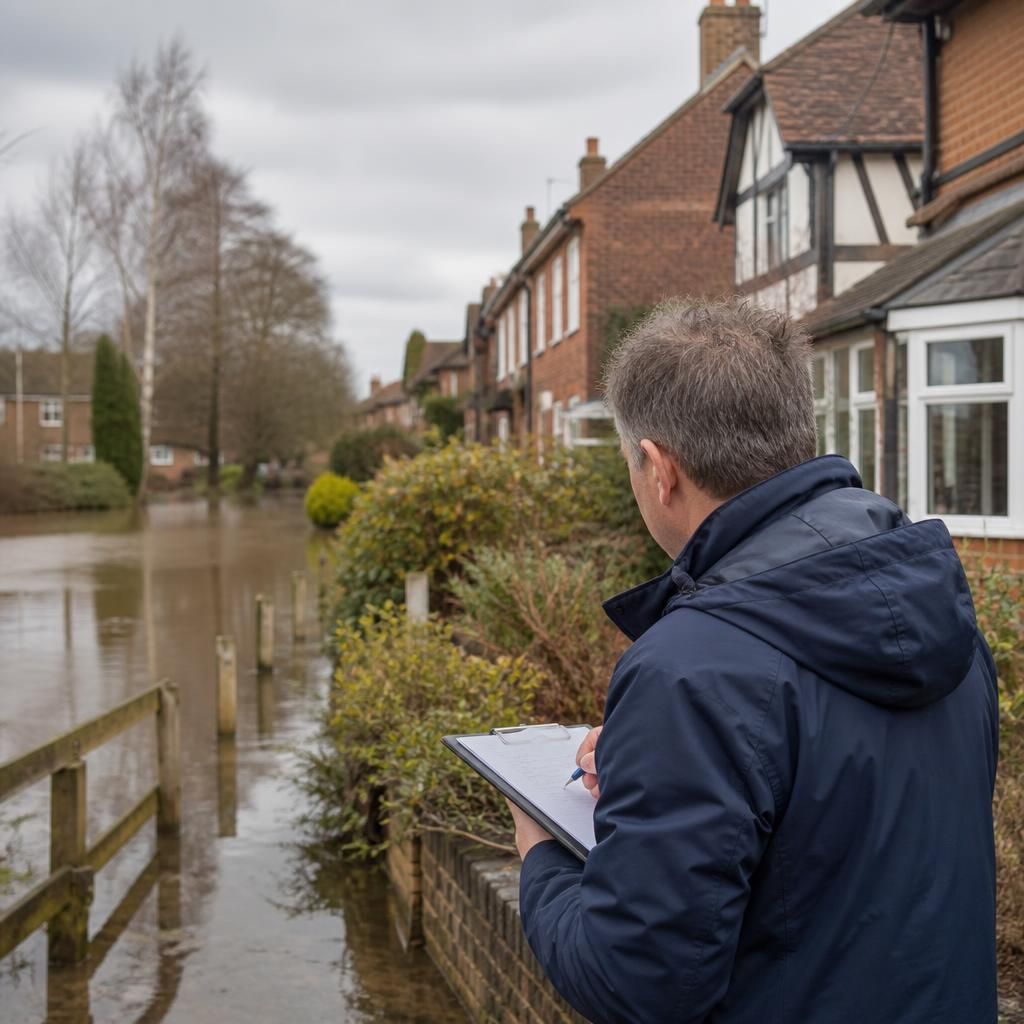
Environmental and physical risks can materially affect an inherited property’s market value, particularly where they influence mortgage lending, insurance or future repair costs. Potential concerns include flood risk, subsidence, contaminated land, radon, Japanese knotweed and structural movement.
These issues do not automatically make a property unsaleable, but buyers may seek specialist reports, additional insurance or a price adjustment. Checking available environmental searches, previous survey reports, repair records and insurance information can help establish whether a perceived risk is confirmed, manageable or likely to affect the offers received.