

What documents are required when selling a house with mortgage arrears for cash?
Selling a house with mortgage arrears for cash usually requires proof of identity, title information, a current mortgage statement showing the arrears, property information forms, and any relevant planning, building regulations, guarantee, leasehold or probate documents. Your conveyancer may also request evidence relating to legal issues affecting the property and will obtain a redemption statement so the outstanding mortgage can be settled from the sale proceeds.
The documents for a cash sale of a house with mortgage arrears are those needed to establish who owns the property, what is owed against it, whether any legal or physical issues affect it, and whether the sale can complete lawfully. In addition to the core sale papers, your conveyancer may need correspondence from the lender, evidence of any possession action, documents explaining unusual ownership arrangements, and paperwork for alterations or restrictions affecting the property.
Mortgage and arrears records
- Letters or emails from the lender confirming the arrears, repayment arrangements, missed-payment history or any change to the account.
- Any notice of default, notice seeking possession, court claim, possession order or enforcement correspondence.
- Details of the lender’s solicitor or enforcement agent, where legal action has started.
- Evidence of payments made under an agreed repayment plan, if this is relevant to the account.
These records help the conveyancer understand the position and identify deadlines or legal restrictions. The lender will normally provide an up-to-date redemption statement before completion. This states the amount required to repay the mortgage, including relevant interest, charges and other sums due at the date specified. A statement obtained too early may no longer be accurate, so the conveyancer may request an updated figure as the sale progresses.
Ownership and title information
The conveyancer checks the Land Registry title to confirm the registered owners, title number, property description, restrictions and charges. If the title is not registered, older deeds may be needed instead. Documents should also be supplied for any restriction requiring another party’s consent, such as a restriction entered by a management company, lender or private individual.
If the property is jointly owned, all registered owners will generally need to provide instructions and sign the relevant documents. If one owner has died, the file may require the death certificate, grant of probate or letters of administration, together with documents showing who has authority to sell. A trust deed, court order, power of attorney or divorce-related order may also be relevant where the ownership or authority to sell is not straightforward.
Property and transaction information
The conveyancer usually asks for completed property information forms and, where applicable, a fixtures and contents form. These give the buyer details about boundaries, disputes, guarantees, utilities, notices, alterations and items included in the sale. Inaccurate or incomplete answers can cause additional enquiries, so answers should be based on the available records rather than assumptions.
Useful supporting paperwork can include:
- Planning permissions, building regulation completion certificates and lawful development certificates for extensions, loft conversions or other works.
- Guarantees, warranties, installation certificates and servicing records for relevant improvements or installations.
- Party wall agreements, rights of way documents, boundary agreements and correspondence about disputes.
- Fencing, drainage, roofing or other specialist guarantees where they exist.
- Any notice received from a council, housing association, management company or other authority affecting the property.
Where documents for alterations cannot be found, the conveyancer may need to investigate whether replacement evidence, an indemnity policy or another solution is appropriate. The correct approach depends on the work, its age and the buyer’s legal requirements; a seller should not arrange an indemnity policy without taking legal advice, particularly if contacting a third party could affect its availability.
Leasehold documents
For a leasehold house, the lease and any variations are important, along with information about ground rent, service charges, buildings insurance, planned major works and notices affecting the lease. The managing agent or freeholder may also need to provide a management information pack, compliance documents, accounts, contact details and details of any transfer or notice fees.
Check whether the lease requires the freeholder’s consent to assign the property, a certificate of compliance or notification after completion. Outstanding ground rent, service charges or administration charges can delay the transaction or need to be dealt with from the sale proceeds, so recent statements and correspondence should be passed to the conveyancer.
Documents for unusual circumstances
Extra evidence may be needed if the property is connected with a divorce, separation, bankruptcy, probate, a company, a trust or a power of attorney. Examples include court orders, trustee resolutions, company authority, bankruptcy details or evidence that the person signing the sale documents has the required legal capacity. The precise documents depend on the circumstances, and the conveyancer may need to verify them with the relevant court, registry or professional adviser.
Preparing the paperwork
- Gather lender correspondence and all documents received about the arrears or possession proceedings.
- Locate the lease, guarantees, certificates, planning papers and other records relating to the property.
- Tell the conveyancer about any missing documents, disputes, occupiers, tenants, alterations or restrictions at the outset.
- Use consistent names and addresses across the documents and explain any differences, such as a former name or an address change.
- Send clear copies and retain the originals unless the conveyancer specifically requests them.
- Check that forms are complete, dated and answered accurately before signing.
Do not conceal the arrears, possession correspondence, second charges or other secured borrowing. The conveyancer must identify all charges that need to be released, and the lender must be dealt with as part of completion. If the sale proceeds may not cover the total amount required to clear the secured borrowing and sale expenses, raise this before committing to the transaction so that the available options can be assessed.
A cash buyer may not need a mortgage valuation or lender-specific documentation, but this does not remove the seller’s legal disclosure obligations. The buyer’s conveyancer can still raise enquiries about title, leasehold matters, alterations and the reason for any unusual transaction feature. Providing a complete and organised file helps those enquiries to be answered accurately and reduces the risk of documents being requested repeatedly.
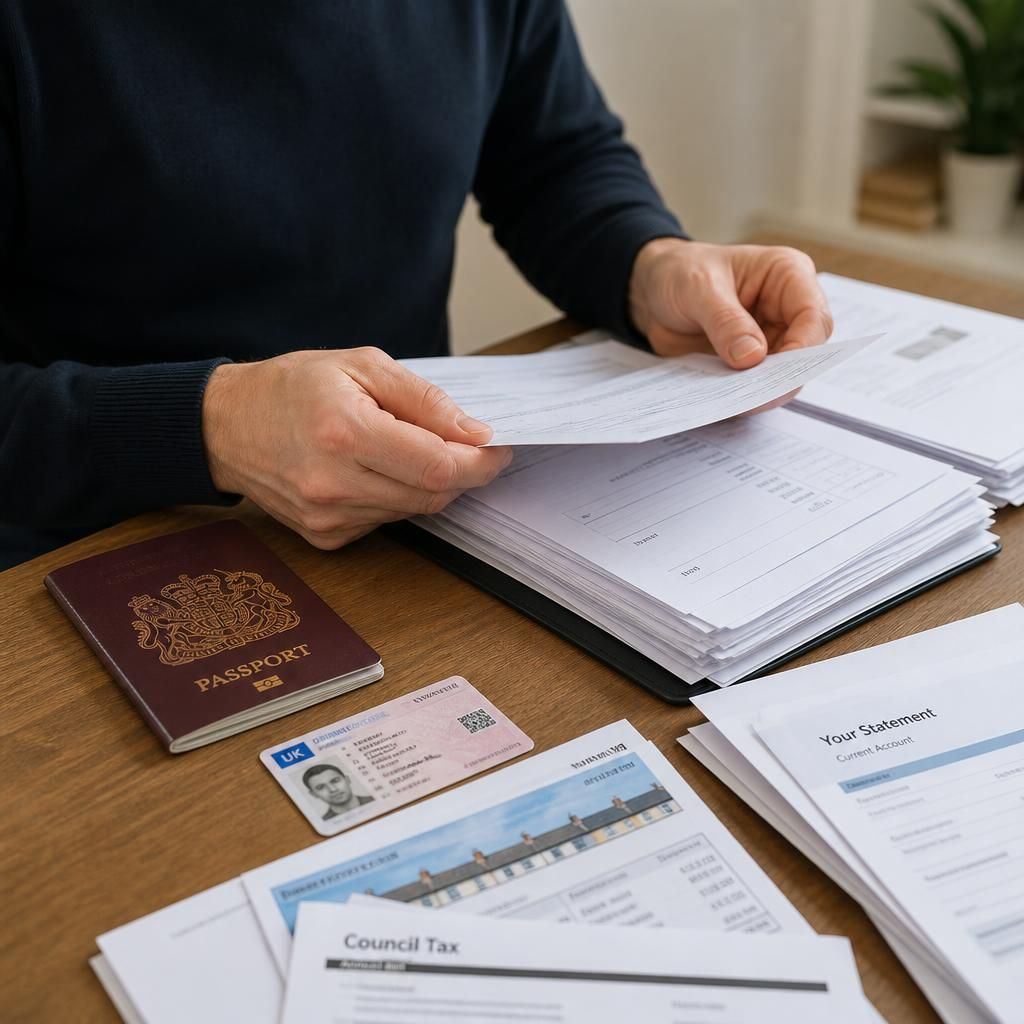
Identity documents are a core part of the conveyancing file when selling a house with mortgage arrears for cash. The conveyancer must confirm that the person giving instructions is the registered owner and is authorised to sell the property.
- A valid passport or photocard driving licence for each seller.
- Recent proof of address, such as a council tax bill, utility bill or bank statement, where requested.
- Evidence of a name change, such as a marriage certificate or deed poll, if the name differs between the identification and Land Registry records.
- Supporting authority documents where someone is signing for an owner, including a valid power of attorney or relevant court documentation.
Provide clear copies in the format requested by the conveyancer and explain any differences in names or addresses at the beginning of the transaction. If identity or authority cannot be verified, the conveyancer may be unable to proceed even where the buyer is paying cash.