

What factors influence the determination of fair market value for personal possessions during estate valuation for probate?
Fair market value for personal possessions in a probate estate is influenced by the item’s condition, rarity, provenance, authenticity, desirability and current demand. Valuers also consider recent comparable sales, specialist market trends and any costs or limitations affecting a realistic sale.
Fair market value for personal possessions in probate is determined at the legally relevant valuation date by estimating the price an informed, willing buyer would pay an informed, willing seller, without either party being forced to transact. The assessment therefore depends not only on the object itself, but also on the ownership evidence, the type of market being considered, the quantity being sold, its location and the quality of the valuation evidence.
Valuation date is a fundamental factor. For inheritance tax and estate administration, the relevant date will generally be the date of death, although the personal representative should confirm the applicable requirement with the estate solicitor or HM Revenue & Customs. A later sale price can provide useful evidence, but it does not automatically replace the value at the required date. Changes in market conditions, currency, public interest or specialist collecting patterns between the two dates may need to be considered.
The legal status of the item can also affect its value. Valuers need to establish whether the possession belonged solely to the deceased, was jointly owned, was subject to a loan or consignment arrangement, or formed part of a trust or business. A valuable item with unclear ownership may not be treated in the same way as an asset with clear title. Documents such as purchase receipts, insurance schedules, wills, partnership records and correspondence can help establish the estate’s interest.
The appropriate market and method of sale must be identified. A value based on a specialist auction, a private treaty sale, a dealer transaction or an open retail market may produce different results. Probate valuation should use the market that is reasonably appropriate for the item and the purpose of the valuation, rather than an exceptional asking price or an unusually favourable private sale. The valuer may also distinguish between an individual item value and a value based on selling several possessions together.
Quantity and grouping are particularly important for household contents, collections and mixed lots. Selling a complete set may produce a different result from separating every component. Conversely, a large number of similar items can exceed the number of likely buyers and reduce the amount realistically achieved for each piece. Sets should be checked for missing components, while collections should be reviewed to determine whether their parts have greater value individually or as a group.
Location and practical sale conditions influence the estimate because transport, access, storage, packing and specialist handling may affect the available market. Bulky furniture, fragile objects and items requiring controlled transportation may attract a different valuation from easily transportable possessions. The valuer should record whether an item is situated in the deceased’s home, in storage or elsewhere, and whether the proposed valuation assumes collection by the buyer or another arrangement.
Evidence supporting the conclusion should be proportionate to the asset and its potential significance to the estate. Relevant evidence may include dated auction results, dealer records, published catalogues, expert opinions and documented offers. An asking price is not the same as an achieved sale price, and online listings should be treated carefully because they may remain unsold or describe items that are not genuinely comparable. For unusual or high-value possessions, an independent specialist report can explain the reasoning behind the figure.
Tax and administration requirements can affect how the valuation is recorded, even where they do not change the underlying market evidence. The personal representative should distinguish the gross value of the possession from any separately allowable selling expense or liability. A valuation prepared for inheritance tax may require different assumptions from one prepared for dividing assets between beneficiaries, so the purpose should be stated clearly in the report.
A sound probate valuation should identify the item, state the valuation date and purpose, explain the assumed market, record the evidence considered and disclose any uncertainty. Keeping photographs, inventories, ownership documents and the valuer’s working notes creates an audit trail. If beneficiaries disagree, a written explanation of the assumptions and evidence can help distinguish a genuine difference in valuation method from a disagreement about how the estate should be distributed.
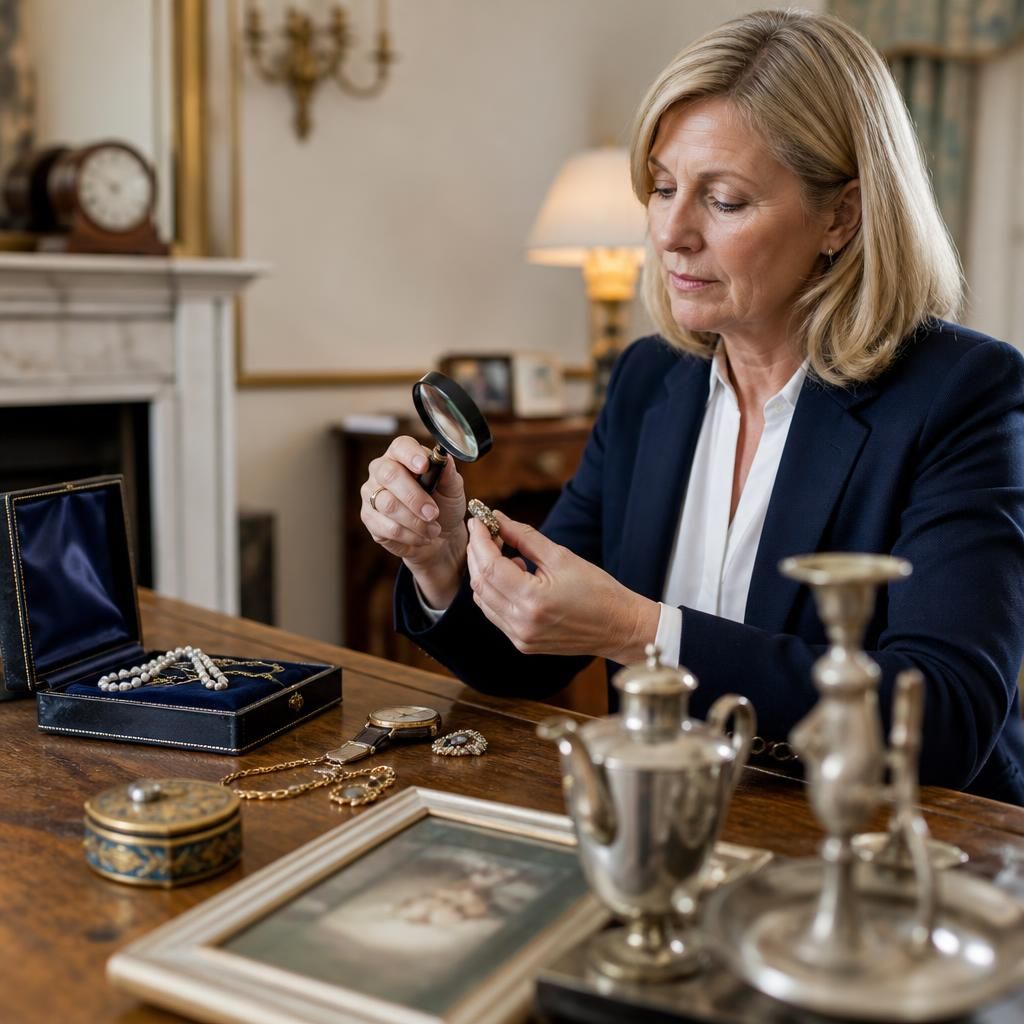
Sentimental or replacement value is not usually the same as fair market value for probate. The relevant figure reflects what an informed buyer would reasonably pay, rather than what the family paid, what an insurer might charge to replace the item, or what the possession means to a beneficiary.
This distinction is particularly important for inherited furniture, personal memorabilia, photographs and customised belongings. An item may have considerable emotional importance but limited demand outside the family. Conversely, a specialist possession may have a stronger market value than its purchase price suggests. Valuers should therefore record objective market evidence separately from any personal attachment or replacement-cost estimate.
If a beneficiary wishes to keep an item, its agreed value should be documented clearly when calculating the estate’s distribution. This helps distinguish the item’s probate market value from any private arrangement between beneficiaries and reduces the risk of treating sentimental value as evidence of what an external buyer would pay.