

What documentation is required for a probate estate valuation?
A probate estate valuation usually requires the property address, ownership and title information, details of the property’s condition and improvements, and any relevant tenancy or legal documents. The valuer may also need the date of death and probate-related paperwork so the valuation can be prepared for the correct estate and valuation date.
There is no single statutory document pack for every probate estate valuation. The required paperwork depends on the property’s tenure, the purpose of the valuation and whether the valuer must report to HM Revenue & Customs, the Probate Registry, a solicitor or the personal representatives. In practice, the most useful documents are those that establish the personal representative’s authority, clarify the valuation instruction and provide evidence of rights, restrictions or obligations affecting the property.
Documents confirming authority to instruct
- A copy of the will and any codicils, where relevant, can help establish who is entitled to deal with the estate.
- The grant of probate or letters of administration may be requested where authority has already been issued. If the grant is not yet available, the valuer may instead accept written confirmation from the instructed solicitor or proposed personal representative.
- Identification and contact details for the executor or administrator may be required for professional due diligence and to confirm who can approve access and receive the report.
- A solicitor’s letter of instruction or written authority can be useful where several executors are involved, one executor is acting on behalf of others, or the property is subject to a dispute.
Documents defining the valuation instruction
- Written confirmation of the purpose of the report, such as inheritance tax reporting, estate administration, a proposed sale, transfer between beneficiaries or a dispute.
- The required valuation date. This is often the date of death for a probate assessment, but the report should state the date clearly rather than leave the valuer to assume it.
- Any instructions from HMRC, the Probate Registry, a court or a solicitor, including requirements about the basis of valuation, report format or supporting evidence.
- Details of any earlier valuation, purchase, sale or transfer that may need to be reconciled with the current opinion. Earlier figures should be supplied for context, not treated as a substitute for an independent assessment.
Tenure and third-party interest paperwork
Leasehold property usually requires more documentation than freehold property. The valuer may need the lease, including plans and schedules, together with information about the remaining lease term, ground rent, service charges, planned major works and any transfer or subletting restrictions. A recent service-charge statement and correspondence from the managing agent can reveal liabilities that are not apparent from an inspection.
For a property occupied by someone other than the deceased, the valuer may also need the relevant agreement, notices, deposit information and records of rent. These documents help establish the legal basis of occupation and whether vacant possession can reasonably be assumed. Shared ownership, right-to-buy, overage, restrictive covenant or housing-association paperwork should also be disclosed because such arrangements can materially affect marketability and value.
Planning, building and specialist evidence
Where available, provide planning permissions, listed-building consents, building-regulation completion certificates and guarantees for structural or specialist work. Relevant records might include approvals for an extension, loft conversion, change of use, drainage installation or renewable-energy equipment. If a certificate is missing, say so explicitly; an undocumented alteration may require a qualification in the report or further investigation.
Other useful supporting material includes guarantees, warranties, architect’s drawings, structural engineer’s reports, damp or timber reports, electrical certificates and records relating to private drainage. The valuer will not automatically accept every document as proof of condition or compliance, but it can identify matters requiring verification.
Financial and legal information
A mortgage statement, redemption statement or correspondence from a lender may be relevant to estate administration, although borrowing normally affects the estate’s net position rather than the property’s market value. Details of charges, restrictions, notices, boundary disagreements, rights of way, party-wall matters or ongoing litigation should be supplied where they exist. The valuer may need to distinguish between a defect in title, an estate liability and a matter that affects the property’s physical value.
Do not omit informal arrangements simply because they are not recorded in a standard property file. A neighbour’s access, an unregistered parking arrangement or a disagreement about a boundary may influence the assumptions on which the valuation is based. The valuer can then state whether legal advice or a title investigation is required.
How to prepare the documents
- Ask the valuer for a document checklist when the instruction is agreed, as requirements differ between freehold, leasehold and unusual properties.
- Send clear copies, retain the originals and identify documents that are incomplete, expired or awaiting confirmation.
- Group the papers by authority, tenure, planning, occupation and legal matters so omissions are easier to spot.
- Tell the valuer about missing certificates or unresolved issues rather than attempting to conceal them. A stated limitation is more useful than an inaccurate assumption.
- Confirm whether sensitive papers should be sent directly to the valuer, solicitor or executor and use an appropriate secure method for transmission.
The valuer may not need every document listed, and obtaining paperwork does not remove the need for independent title or legal advice. The final report should identify the documents inspected, the assumptions made and any matters that could not be verified. This makes the valuation more transparent and helps the personal representatives understand whether further evidence is needed before submitting estate accounts or making decisions about the property.
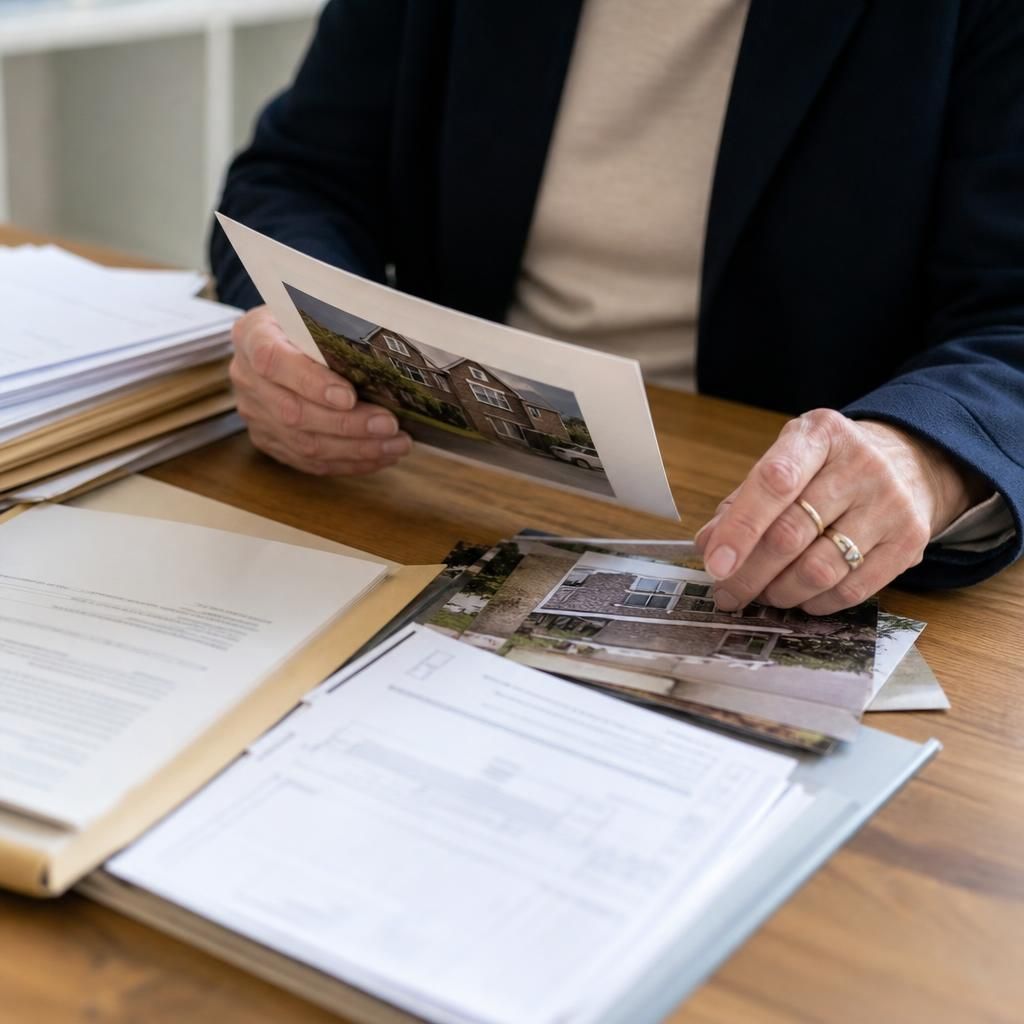
Where the valuation relates to the date of death, dated evidence can help the valuer assess the property as it was at that time rather than relying only on its present condition. Useful examples may include photographs, inventories, repair invoices, insurance correspondence or records of significant deterioration or improvement after the death.
Such material does not replace an inspection or independent valuation. It provides context where the property has since been cleared, renovated, damaged or otherwise altered, allowing the valuer to explain which evidence was considered and how later changes were treated.