

What are the steps involved in selling a house during probate?
Selling a house during probate usually involves confirming the executor’s authority, obtaining a suitable valuation, preparing the property and legal documents, marketing it, accepting an offer, and completing the conveyancing once the estate has the necessary authority to sell. A UK cash buyer may provide an alternative to open-market marketing, but the executor must still follow the probate and conveyancing requirements.
Selling a house during probate is a legal process in which the deceased person’s personal representative sells the property for the estate, subject to the authority granted by the probate system and the requirements of the conveyancing process. The practical steps depend on whether there is a valid will, whether probate or another form of representation has been granted, how the property is owned, and whether any beneficiaries or creditors raise concerns.
- Identify who has authority to deal with the property. The will usually names an executor. If there is no will, or the named executor cannot act, an administrator may need to be appointed. Together, executors and administrators are known as personal representatives. They should establish whether the property was owned solely by the deceased or jointly with someone else, because joint ownership can affect whether the property passes automatically to the surviving owner or forms part of the estate. The rules also differ between England and Wales, Scotland and Northern Ireland, so local legal advice may be necessary.
- Locate the key estate documents. The personal representative will generally need the original will, the death certificate, identification documents, details of the deceased’s assets and debts, and evidence of ownership. The Land Registry title register can help confirm the registered owners, restrictions, charges and mortgage interests. If the property is unregistered, older deeds may be needed. A solicitor can check whether the documents are sufficient for the intended sale.
- Deal with inheritance tax and the application for authority. Before applying for the relevant grant or confirmation, the estate may need to be valued and reported to the appropriate tax authority. The valuation should include the property and other relevant assets, while debts and allowable reliefs may also need to be considered. A probate valuation and a marketing valuation serve different purposes: one supports estate administration, while the other helps determine a realistic sale price. The personal representative should keep written evidence of how the property value was assessed.
- Check whether the property can be marketed before the grant. A property can often be advertised and an offer can sometimes be negotiated before the grant is issued, but the personal representative must not assume that an early agreement removes the need for formal authority. The buyer’s solicitor will usually want evidence that the seller has the right to transfer the property. If the grant is not available by the proposed completion date, the transaction may be delayed or require special contractual arrangements. The selling solicitor should confirm what can safely be done in the relevant jurisdiction.
- Protect and assess the property. The property should be insured appropriately, secured and maintained while the estate is being administered. Utilities, council tax, buildings insurance, mortgage payments and urgent repairs should be reviewed. The personal representative should also establish whether the house is occupied, tenanted, empty or affected by subsidence, unauthorised alterations, contamination or other defects. Disclosing known issues is important because failing to provide accurate information can cause disputes, renegotiation or a claim after completion.
- Obtain a suitable market assessment. The estate can obtain advice from an estate agent, surveyor or other property professional. The personal representative should consider the condition of the house, recent comparable sales, likely repair costs, market demand and the cost of holding the property. A higher asking price is not automatically better if it creates a long marketing period or additional maintenance costs. The decision should be recorded as part of the estate’s administration, particularly where several beneficiaries are involved.
- Choose the sale route and obtain appropriate consent. An open-market sale may involve an estate agent, photographs, viewings and a period of marketing. An alternative is to approach a cash property buyer directly. This may reduce the need for public marketing, but the buyer should still be checked carefully. The personal representative should request proof of funds, confirm the proposed price and understand any deductions, conditions or fees before accepting an offer. A cash purchase does not remove the need for identity checks, legal work, title investigation or probate authority.
- Manage beneficiary expectations and possible conflicts. Executors must act in the interests of the estate rather than favouring one beneficiary. Where several beneficiaries are entitled to share the proceeds, it is sensible to explain the proposed sale method and retain evidence supporting the agreed price. A beneficiary who believes the property is being sold below market value may object or seek legal advice. If there is disagreement, the personal representative should avoid exchanging contracts until the position has been reviewed by a probate solicitor.
- Instruct conveyancers and answer the buyer’s enquiries. The estate’s solicitor or conveyancer will prepare the contract, check the title and provide the buyer with the relevant property information. This may include forms concerning boundaries, alterations, services, disputes, notices, insurance, flooding, planning and building regulations. The solicitor will also confirm the seller’s capacity, deal with any mortgage or restriction, and provide the grant or other authority when available. Missing information about the deceased’s ownership or the property’s history can make this stage take longer.
- Exchange contracts only when the estate is ready. Exchange makes the agreed sale legally binding and fixes the completion obligations. Before exchange, the personal representative should ensure that the sale price and contract terms have been approved, the title position is understood, the buyer’s funding has been checked and the required authority is available or will be available in time. The contract should also address vacant possession, fixtures, contents and any special arrangements for the property. Legal advice is important if the property is occupied or the estate has unresolved debts or disputes.
- Complete the sale and account for the proceeds. On completion, the buyer’s money is transferred to the seller’s solicitor and ownership passes in accordance with the contract. The solicitor normally repays any mortgage or secured charge, settles agreed sale costs and sends the balance to the estate account. The personal representative must then deal with estate debts, tax obligations and administration expenses before distributing the remaining funds to beneficiaries. Sale proceeds should not normally be divided informally or paid out before the estate’s liabilities have been assessed.
- Retain a complete administration file. Records should include the valuation evidence, marketing details, offers considered, correspondence with beneficiaries, legal documents, completion statement, invoices, tax calculations and proof of distributions. These records help demonstrate that the personal representative acted properly and provide an audit trail if a beneficiary or creditor later asks how the sale was handled.
How long can the process take? The timing depends on the estate’s complexity, the availability of the grant or confirmation, title problems, tax reporting, the sale route, the buyer’s legal work and the condition of the property. A straightforward transaction may progress without major difficulty, whereas missing deeds, an unregistered title, unclear ownership, tenants, structural problems or disputes can add substantial work. The sale and the probate administration should therefore be planned together rather than treated as completely separate processes.
When professional help is appropriate. A probate solicitor is particularly useful where there is no will, more than one executor, disagreement between beneficiaries, a mortgage or restriction, an unregistered property, a business interest, a tenant, overseas assets or uncertainty about tax. A cash buyer may offer a direct sale route for an executor who does not want to use traditional marketing, but independent legal advice remains important. The buyer’s offer should be compared on its overall terms, including price, deductions, conditions and the proposed completion arrangements, not solely on the headline figure.
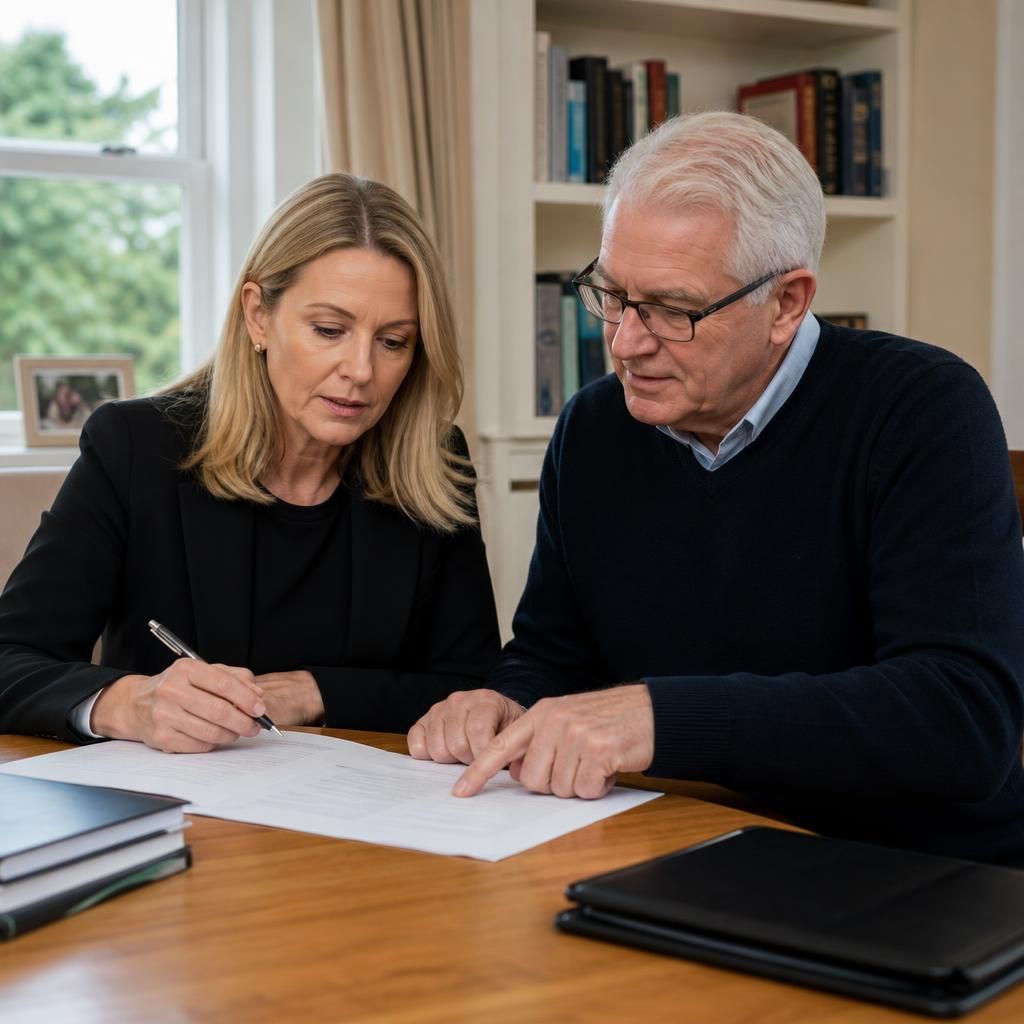
One important step is ensuring that the sale contract identifies the correct legal seller. A probate property is generally sold by the personal representative of the estate, rather than by the beneficiaries personally. The contract and transfer document must reflect the authority available, the names of the executor or administrator, and the property’s registered ownership. If the title contains restrictions or has not been updated after the death, the conveyancer must establish the correct procedure before completion.
This detail matters because an offer can be agreed in principle but still fail to complete if the seller’s legal capacity is unclear. The estate’s solicitor should check the grant or other representation document, confirm how the title will be transferred, and ensure that every required personal representative signs the relevant paperwork. The exact requirements can differ across the UK, so the contract should be prepared for the jurisdiction in which the property is located.