
What are the key marketing strategies to ensure a home is sold quickly and efficiently?
To sell a home quickly and efficiently, combine an evidence-based asking price with strong presentation, accurate listing details and targeted online promotion. Use clear photography, highlight practical selling points, respond promptly to enquiries and keep viewings straightforward so interested buyers can make informed decisions without unnecessary delays.
The most effective marketing strategy for a fast home sale is a coordinated campaign that reaches the right buyers, presents a clear reason to act and removes avoidable uncertainty from the purchase process. This involves defining the likely buyer, choosing suitable marketing channels, communicating the property’s strongest commercial features and reviewing the campaign based on the quality of interest it generates.
1. Identify the most likely buyer
Marketing becomes more effective when it is aimed at a specific audience rather than presented as a general appeal. Consider whether the property is most suitable for a first-time buyer, a family, a landlord, an investor, someone seeking a renovation project or a purchaser looking for a property that can be occupied without major work. The likely audience will influence the wording, images, channels and information used in the campaign.
For example, an investor may focus on rental potential, layout and future improvement opportunities, while an owner-occupier may be more interested in transport links, storage, schools and the practical arrangement of the rooms. These points should be stated accurately and supported by relevant information rather than exaggerated claims.
2. Create a clear selling proposition
A fast-sale campaign should communicate what makes the property worth considering and why it may suit the intended buyer. A concise selling proposition can refer to features such as tenure, parking, outdoor space, development potential, condition, occupancy status or the absence of a lengthy chain, where those facts genuinely apply.
Do not rely on vague descriptions such as “must be seen” or “won’t be available for long”. Specific information helps buyers assess suitability before committing time to the next stage. It also reduces the risk of attracting enquiries from people whose requirements do not match the property.
3. Use a planned mix of marketing channels
Online property portals may provide broad exposure, but a campaign should not depend on one channel alone. Depending on the property and its audience, suitable routes can include the seller’s own contacts, local community groups, property investor networks, professional contacts and direct approaches to relevant buyer databases.
Each channel should use consistent core information so that the price, tenure, room arrangement and key conditions do not appear different from one source to another. Inconsistencies can create doubt and lead buyers to question whether important information has been omitted.
4. Make the campaign easy to assess
Buyers are more likely to progress when they can establish the essential facts without repeated clarification. A useful marketing pack should set out the property’s tenure, council tax band where known, expected completion requirements, included items, planning information and any known restrictions or defects. Supporting documents should be gathered early and kept consistent with the marketing material.
This is particularly important where the property has unusual legal circumstances, requires substantial work, is being sold through probate or is connected with mortgage arrears or repossession concerns. Such circumstances do not need to be concealed, but they should be explained accurately so that interested parties can decide whether they are able to proceed.
5. Target buyers who can actually complete
Speed depends not only on generating interest but also on distinguishing serious, proceedable buyers from people who are still preparing to sell another property or arrange finance. Basic qualification can establish whether a buyer has a mortgage agreement in principle, funds available, a related sale or a preferred timescale.
This information should be used carefully. A cash buyer may have fewer finance-related dependencies, but proof of funds and appropriate legal checks still matter. A direct sale to a cash property buyer is another route to consider where avoiding a conventional open-market campaign is more important than seeking offers through multiple buyer channels. The comparison should include the proposed price, contractual terms, fees, due diligence and the intended completion process.
6. Use urgency without creating distrust
A campaign can explain genuine reasons for a preferred completion date or a need to avoid a prolonged transaction. However, manufactured scarcity, undisclosed defects or pressure to accept an offer without proper checks can damage confidence and create problems later.
State clearly whether offers are invited above, below or at the asking price, whether the property will remain available while legal work is undertaken and which fixtures or fittings are included. Clear terms help suitable buyers make a decision while reducing the chance of renegotiation caused by misunderstanding.
7. Monitor the quality of interest
Marketing should be assessed by more than the number of enquiries. Consider whether people are asking relevant questions, arranging the next stage, demonstrating that they can proceed and making offers that reflect the property’s evidence and condition. A high volume of unsuitable interest may indicate that the wording is attracting the wrong audience, while very little interest may suggest that the positioning, information or chosen channels need review.
Changes should be made methodically rather than repeatedly altering several elements at once. Review the audience, description, supporting information and campaign route in turn, and keep a record of changes and subsequent feedback. This makes it easier to identify what is affecting buyer engagement.
8. Coordinate marketing with the legal process
Marketing works best when the property can move into conveyancing without avoidable administrative delay. Identify the seller’s solicitor early, locate title and property documents and prepare answers to standard property information enquiries where possible. If there are leasehold obligations, planning matters, boundary questions or defects, obtain the relevant information before it becomes a source of uncertainty.
In summary, a fast-sale marketing plan should combine precise audience targeting, consistent information, suitable distribution channels, honest positioning and early qualification of buyers. The aim is not simply to attract attention; it is to attract a buyer whose circumstances, expectations and ability to proceed match the property and the seller’s required terms.
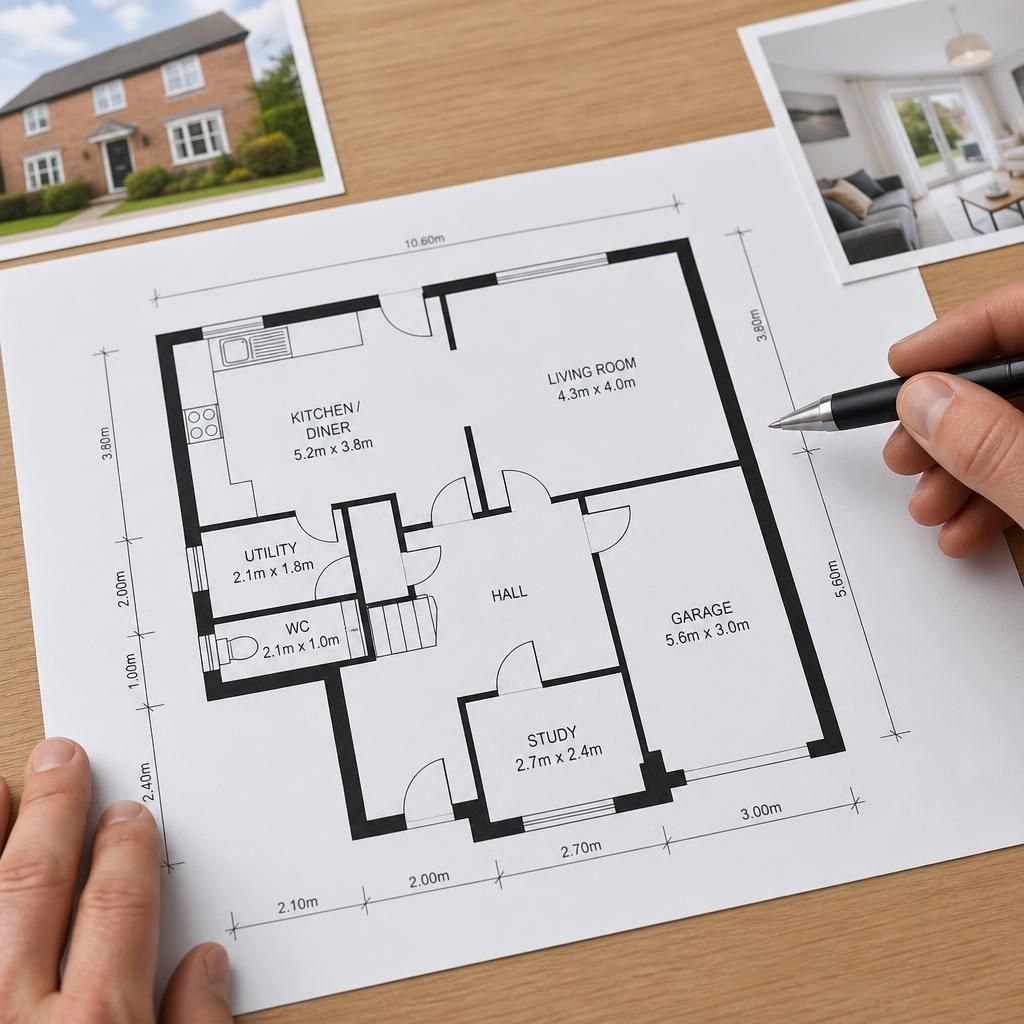
A dimensioned floor plan is a useful marketing asset because it allows prospective buyers to understand the property’s layout before arranging a viewing. It should show room names, approximate measurements, access points and the relationship between key spaces, with any extensions or unusual arrangements represented accurately.
Use the floor plan alongside photographs rather than as a substitute for them. Buyers can assess whether their furniture, household needs or intended use are compatible with the layout, which helps make viewings more purposeful. Check that the plan matches the current property and clearly identify measurements as approximate where appropriate; an inaccurate plan can undermine confidence and create disputes later.
Explore Your Options for Selling Your Home Quickly
If a direct cash sale may suit your circumstances, review the proposed terms, fees and completion requirements before deciding whether to proceed. Contact Buy Houses Fast to discuss your property and compare this option with a conventional marketing campaign.