

How do I accurately determine the market value of my property without using an estate agent?
To determine your property’s market value without an estate agent, compare recent sales of similar nearby homes, review current competing listings and adjust for your property’s size, condition, location and features. For a more independent assessment, you can also obtain a valuation from a qualified surveyor or compare offers from professional property buyers.
A property’s market value is the price it could reasonably achieve on a stated date between a willing buyer and a willing seller, assuming neither is under unusual pressure and both have access to the relevant information. An asking price is only the seller’s starting position, while an estate agent’s appraisal may be influenced by the intention to win instructions. An independent valuation should therefore be based on verifiable evidence, clearly stated assumptions and the circumstances affecting the property.
Start by defining the valuation date and the type of value you need. A normal open-market valuation is different from an auction estimate, a forced-sale figure or a price intended for a lender. If you need to sell because of arrears, probate or another deadline, that circumstance may affect the practical price and marketing strategy, but it does not automatically redefine the property’s underlying market value.
Use HM Land Registry records to examine completed transactions rather than relying solely on advertised prices. Sold-price data can help establish what buyers have actually paid, but it needs careful interpretation. Check whether the recorded transaction appears to be a normal sale, whether the property was transferred between connected parties, and whether the description or date creates uncertainty. A single transaction should not determine your conclusion; look for a consistent pattern in genuinely comparable evidence.
Property portals are useful for understanding competition, but listed prices are not proof of value. A home may be overpriced, under offer, repeatedly reduced or marketed under unusual conditions. Treat listing information as context rather than evidence of the final achievable price. Where possible, record the date each listing was inspected so that your assessment does not rely on information that has since changed.
Investigate factors that may not be obvious from photographs or a basic property description. These can materially affect a buyer’s willingness to pay:
- Freehold, leasehold or shared-ownership status, including the remaining lease term and any service-charge obligations.
- Restrictions in the title, rights of way, access arrangements, covenants or disputes affecting use of the property.
- Planning permissions, building-regulation approvals, lawful-use certificates and any unauthorised alterations.
- Structural movement, damp, Japanese knotweed, subsidence history, roof defects or other issues that could affect lending and insurance.
- For flats, the condition of communal areas, planned major works, reserve-fund position and the management company’s records.
- Energy performance, heating systems, drainage, access, parking rights and the practical cost of bringing the property up to an acceptable standard.
Do not treat improvements as automatically adding their full cost to the value. Buyers pay for the benefit and appeal of an improvement, not simply the amount spent on it. Quality, age, design, compliance and how well the work suits the property all matter. Keep invoices, guarantees, certificates and planning documents available because missing paperwork can create doubt during conveyancing or mortgage underwriting.
It is useful to produce a valuation range rather than a single precise figure. Set out the evidence used, the assumptions made and the reasons for placing the property towards one end of the range. Then test the conclusion against likely buyer objections. If the figure depends on a purchaser accepting unresolved legal work, extensive repairs or a short lease, state that clearly rather than presenting the price as unconditional.
Online valuation tools can provide an initial indication, but they usually rely on limited property data and automated assumptions. They may not recognise an unusual layout, a converted building, a development restriction or a defect. Treat their results as a screening exercise, not as a substitute for checking documents and local transaction evidence.
For a more formal opinion, instruct a suitably qualified surveyor and confirm which type of report is required. Ask what information the valuation will consider, whether the inspection is limited, and whether the report is for an open-market sale, probate, taxation, lending or another purpose. A valuation report is only as reliable as the information supplied, so disclose known defects and provide relevant paperwork.
Finally, separate market value from the amount a particular buyer may offer. A cash buyer may assess risk, repair costs, resale prospects and the convenience of a direct transaction differently from a mortgage-funded buyer. A written offer should therefore be reviewed alongside its conditions, proposed deductions, proof of funds and legal assumptions. If you request an offer from a professional property buyer, use it as an additional reference point and check precisely what is included before comparing it with an open-market estimate.
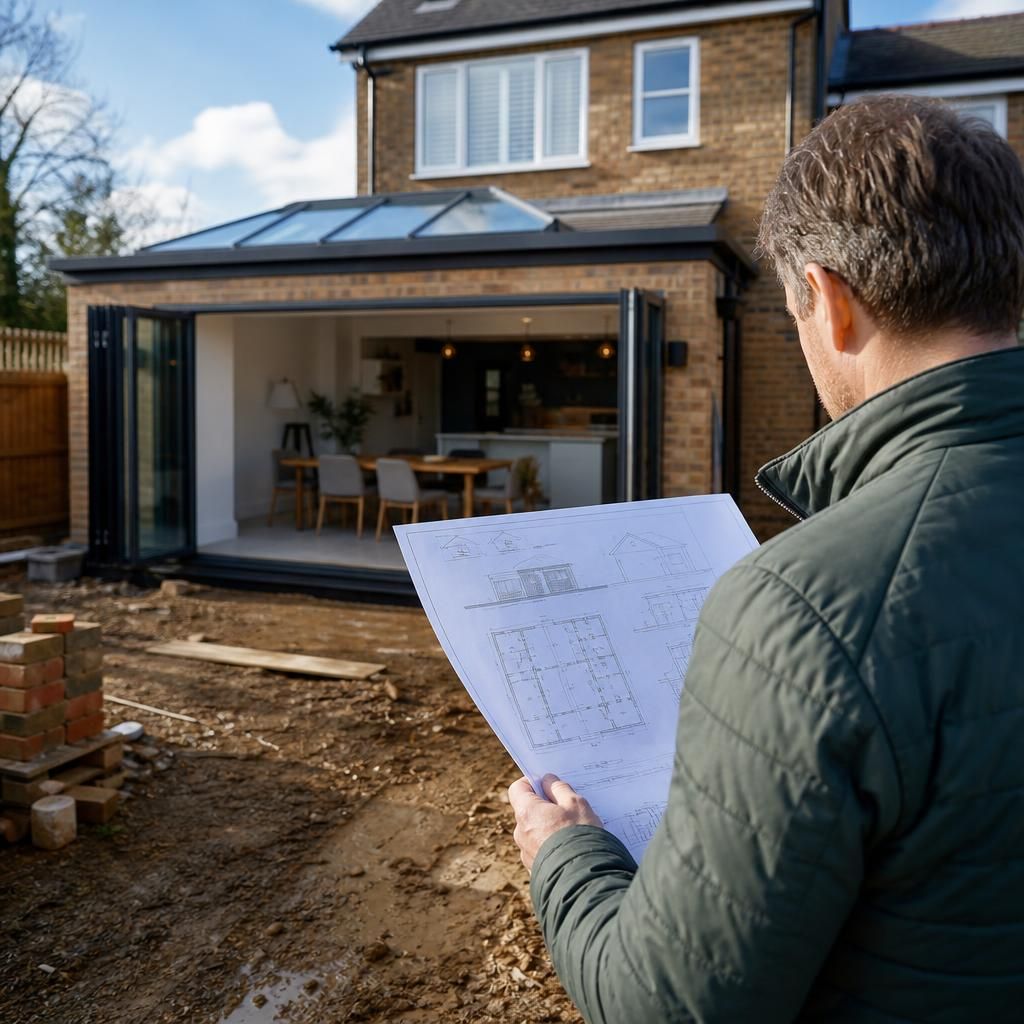
Potential improvements should be valued separately from the property’s existing market value. An unapproved extension, possible conversion or larger garden may create “hope value”, but buyers will usually discount for planning uncertainty, professional fees, construction costs, financing and the risk that consent is refused. Base the main valuation on the property as it currently exists, then consider any permitted or realistically achievable opportunity as a separate adjustment. Where development potential is relevant, support it with planning decisions, permitted-development checks, drawings, access information and evidence of comparable completed projects rather than relying on an assumption that permission will be granted.