

What legal conditions allow the sale of a house before obtaining probate?
In England and Wales, a house may be marketed and a sale agreed before probate where the valid will names the executor, or the appropriate administrator is entitled to act under the intestacy rules; however, completion and transfer usually require the grant of probate or letters of administration. A surviving joint owner may be able to sell a jointly owned property without a grant where the property passed automatically by survivorship.
A house can generally be marketed and, in suitable circumstances, a sale contract can be agreed before probate is obtained, but the sale must be authorised by the person legally responsible for the estate and capable of being completed under the land registration and conveyancing rules. The key issue is not simply whether a buyer has been found; it is whether the estate’s representative has sufficient authority to bind the estate and transfer the property.
In England and Wales, the relevant conditions usually include the following:
- There must be a person entitled to administer the estate. This will normally be an executor appointed by a valid will or an administrator entitled under the intestacy rules. If there is no valid will, the proposed administrator may need to wait for letters of administration before taking formal steps on behalf of the estate.
- The estate’s representative must be willing and able to act. An executor who has renounced their role, lost the right to act, or is involved in a dispute may not be able to proceed. Where there is more than one executor, the conveyancer will normally check whether all relevant executors must act together.
- The property must be correctly identified as an estate asset. The title, ownership structure, mortgage details and any restrictions registered against the property need to be checked. A property held by the deceased alone is treated differently from one held jointly or through a trust.
- The proposed sale must be in the estate’s interests. Personal representatives owe duties to the estate and its beneficiaries. They should take reasonable steps to establish the property’s market value, consider any offers properly and avoid selling at an unjustifiable undervalue. Beneficiaries may raise concerns if the representative appears to favour one person or acts negligently.
- Any mortgage or secured borrowing must be dealt with. The lender’s redemption figure, title requirements and consent to the transfer may affect whether the transaction can proceed. A sale cannot simply ignore a charge registered against the property.
Marketing the property is usually less legally demanding than transferring ownership. An estate agent or buyer may be able to advertise the house and negotiate terms while the probate application is being prepared. However, the proposed contract should make clear that completion depends on the estate representative having the documents and authority required by the conveyancers.
In some cases, the parties may exchange contracts before the grant is issued. This is more likely where the executor’s position is clear, the title is straightforward and both conveyancers are satisfied that the grant is expected. A contract may contain a condition allowing completion only once probate or the appropriate grant has been obtained. Such an arrangement should be drafted by a solicitor because exchanging contracts can create binding obligations even though the transfer cannot yet be registered.
Completion and registration present the main practical restriction. If the deceased was the sole registered proprietor, the Land Registry will normally require evidence of the personal representative’s authority before the buyer can be registered as the new owner. The buyer’s solicitor and mortgage lender may therefore refuse to complete until the grant has been issued, even where the estate representative has signed a contract.
Beneficiaries cannot normally replace the legal authority of the executor or administrator simply by agreeing to the sale. Their consent may be relevant where the will, a trust or a family arrangement requires it, but it does not by itself give them power to transfer the deceased’s registered property. A beneficiary who signs an agreement without authority could create personal legal risks without being able to deliver good title.
Ownership as tenants in common requires particular care. The deceased’s share normally forms part of the estate rather than passing automatically to the surviving owner. The personal representative may therefore need to deal with that share as part of the administration, and the title may require additional steps before a sale can complete. The position can also change where a trust, minor beneficiary, restriction or dispute is involved.
Other issues that may prevent or delay a pre-probate sale include:
- a challenge to the validity of the will or a dispute over who should administer the estate;
- uncertainty about whether the deceased owned the whole property or only a share;
- missing title documents or an unregistered title that requires investigation;
- an existing restriction, charging order, lease, tenancy or mortgage;
- the need for a court order or additional consent because a beneficiary is a minor or lacks capacity; and
- an executor’s conflict of interest or concern that the agreed price does not protect the estate.
An indemnity policy may sometimes address a particular conveyancing risk, but it does not create authority where none exists and does not replace a grant when the buyer’s solicitor or the Land Registry requires one. A cash buyer may have fewer lender-related conditions than a mortgaged purchaser, but cash payment does not remove the need for proper authority, a valid title and lawful administration of the estate.
The sale proceeds should be paid into an account controlled for the estate and recorded in the estate accounts. They should not normally be paid directly to one beneficiary or used as the executor’s personal funds. The personal representative remains responsible for settling valid debts, expenses and tax obligations before distributing the balance under the will or intestacy rules.
The rules are different in Scotland, where the equivalent authority is generally called confirmation, and Northern Ireland has its own probate procedures. Anyone considering an agreement before the relevant grant is issued should have an estate solicitor and conveyancer confirm the authority, ownership and completion requirements before committing to the transaction.
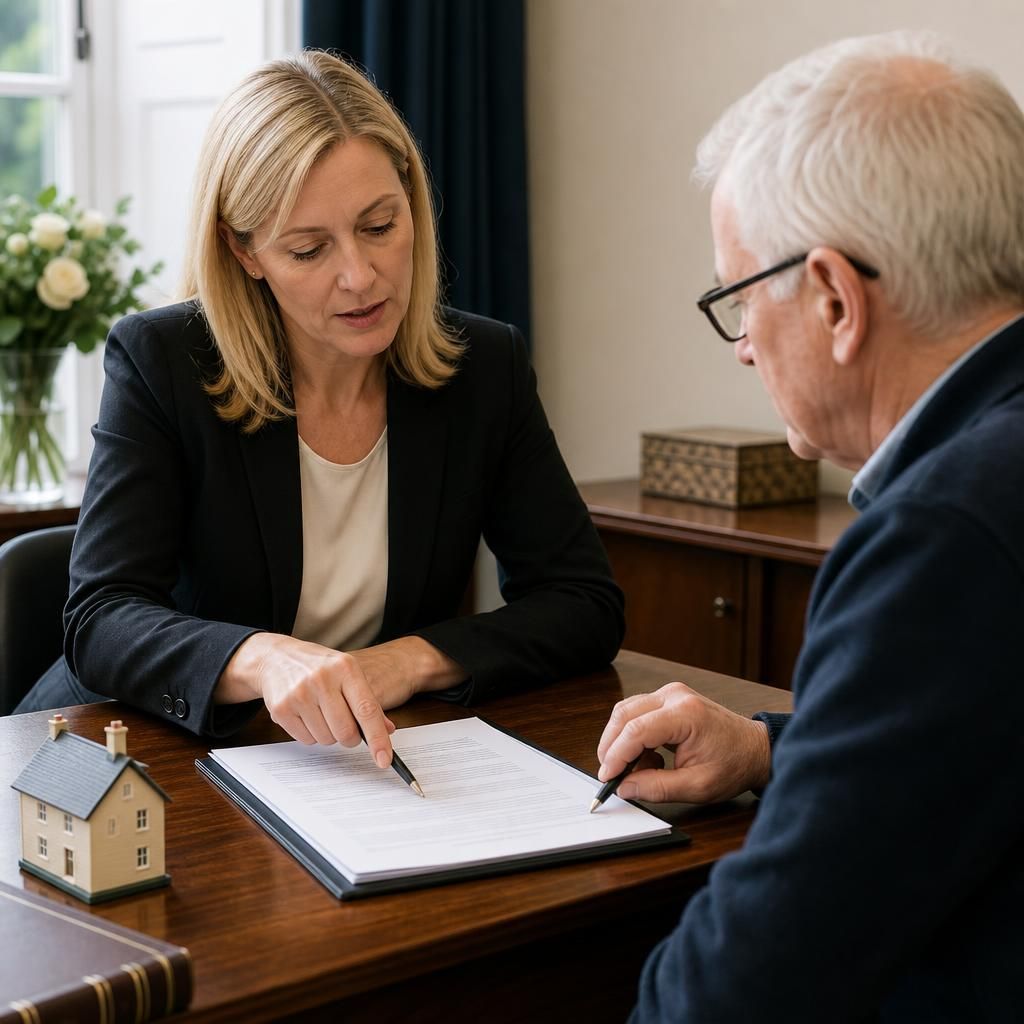
A pre-probate sale needs carefully drafted contractual safeguards because the parties may agree terms before the estate can complete the transfer. The contract should identify the personal representative, state that completion depends on the required grant and conveyancing evidence, and explain what happens if that authority is delayed or cannot be obtained.
It should also deal expressly with the deposit, completion deadline, vacant possession, insurance and responsibility for maintaining the property. A solicitor can include an appropriate long-stop date and termination provisions, reducing uncertainty for both the estate and the buyer. Until the legal conditions for completion are satisfied, neither side should treat an informal agreement or acceptance of an offer as proof that ownership has transferred.